Volcano Trekking: 10 Active Volcanoes You Can Actually Hike
Summit active volcanoes from Indonesia to Iceland. Complete trekking guide with difficulty ratings, costs, eruption risks, and the best time to climb each peak.

This post may contain affiliate links. Disclosure
There is something primal about standing on the rim of an active volcano. The earth rumbles beneath your feet. Sulfurous gases rise from vents in the rock. A crater lake steams and bubbles with unearthly colors. You are standing on a living, breathing piece of the planet, and it could wake up at any moment. Volcano trekking is one of the most dramatic and otherworldly adventure experiences available. The landscapes around active volcanoes are unlike anything else on Earth: moonscapes of lava rock, vivid sulfur deposits, pristine crater lakes, and panoramic views from summits that tower above the surrounding terrain.
In 2026, many of the world’s most spectacular volcanoes are accessible to fit hikers with proper guidance and preparation. This guide covers ten active volcanoes that you can actually hike, from straightforward day trips to serious multi-day mountaineering expeditions.
1. Mount Bromo, Java, Indonesia
Mount Bromo is perhaps the most photogenic volcano on Earth. Rising from the vast, flat Tengger caldera, with its smoking crater surrounded by a sea of volcanic sand, it looks like a scene from another planet. The classic experience is watching sunrise from the Penanjakan viewpoint as the caldera fills with mist and the cone of Bromo emerges from the clouds.
The hike to Bromo’s crater rim is straightforward: a jeep ride across the sand sea, a short walk up concrete steps, and you are standing on the rim of an active, smoking crater. The sulfurous gases are pungent, and peering into the crater feels genuinely dangerous (because it is, there is no guardrail).
Height: 2,329 meters Difficulty: Easy (the crater rim walk is less than 1 hour) Cost: Jeep tour from $30-50 per person. Park entry $15. Best season: April through October (dry season) Getting there: Fly to Surabaya, drive 3-4 hours to Cemoro Lawang (the gateway village) Where to stay: Cemoro Lawang has basic homestays from $8-15 per night Last eruption: Active, with frequent small eruptions. Check current status before visiting.
Pro Tip: Combine Bromo with a night hike to nearby Mount Ijen (covered below) for a volcano double-header. The two are about 6 hours apart by road.
 Photo credit on Pexels
2. Kawah Ijen, Java, Indonesia
Kawah Ijen is famous for its surreal blue fire, a phenomenon caused by sulfuric gases combusting as they emerge from cracks near the crater. The hike begins around 1 AM to reach the crater in time for the blue fire display (visible only in darkness), followed by a sunrise over the world’s largest acidic crater lake, which glows an eerie turquoise-green.
The descent into the crater to see the blue fire up close passes through thick sulfur fumes. A gas mask is mandatory. Miners still hand-carry blocks of yellow sulfur up from the crater floor in one of the most dangerous and physically demanding jobs on Earth. Height: 2,386 meters Difficulty: Moderate (steep descent into crater, toxic gases) Cost: Guide from $15-30. Park entry $5. Gas mask rental $5. Best season: April through October Getting there: Banyuwangi (eastern Java), then drive to the trailhead Where to stay: Banyuwangi hotels from $10-20 per night Essential gear: Gas mask (provided by guide or available for rent)
3. Cotopaxi, Ecuador
Cotopaxi is one of the world’s highest active volcanoes and one of the most iconic peaks in South America. The near-perfect snow-capped cone rises 5,897 meters above the Ecuadorian Andes, and the summit climb is one of the most accessible high-altitude mountaineering experiences in the world. The standard route involves driving to the refuge at 4,800 meters, sleeping for a few hours, and then beginning the summit attempt around midnight. The climb takes 6-8 hours on a glacier, requiring crampons, an ice axe, and rope work. You summit at dawn with views that stretch to the Amazon basin.
Height: 5,897 meters Difficulty: Hard (altitude, glacier travel, technical climbing) Cost: 2-day guided climb from $200-400 per person Best season: August through January (least precipitation) Getting there: 2 hours south of Quito Where to stay: Refugio Jose Rivas at 4,800m ($30 per night). Hotels in Latacunga from $15. Requirements: Previous experience with crampons and ice axes recommended. Altitude acclimatization essential (spend at least 3-4 days above 3,000m before attempting the climb).
4. Mount Etna, Sicily, Italy
Mount Etna (3,357 meters) is Europe’s highest and most active volcano, and its frequent eruptions make it one of the most dynamic volcanic landscapes on the continent. The summit area is a constantly changing terrain of craters, lava flows, and steam vents. You can hike independently to about 2,900 meters, but above that, a guide is required. The summit area features multiple craters, some actively steaming, and the views of Sicily and the Tyrrhenian Sea are magnificent.
Height: 3,357 meters Difficulty: Moderate (well-maintained trails, significant elevation gain) Cost: Independent hiking: cable car 35 euros. Guided summit hikes from 80-120 euros. Best season: May through October (snow-free). Winter visits on snowshoes or skis are also possible. Getting there: 1 hour from Catania, Sicily Where to stay: Catania has hostels from 15 euros. The Rifugio Sapienza at 1,900 meters has accommodation from 50 euros.
 Photo credit on Pexels
5. Pacaya, Guatemala
Pacaya is one of the most accessible active volcano hikes in Central America. The trail to the summit takes about 2 hours and passes over recent lava flows where you can feel the heat radiating through your boots. On active days, you can see red-hot lava glowing at the base of the summit cone. Height: 2,552 meters Difficulty: Easy-Moderate (well-maintained trail, 2-hour hike) Cost: Guided hike from $15-30 per person. Park entry $8. Best season: November through April (dry season) Getting there: 1 hour south of Antigua, Guatemala Where to stay: Antigua has hostels from $6-10 per night and hotels from $20.
Pro Tip: Bring marshmallows. Seriously. You can roast them over volcanic heat vents near the summit, and it has become a beloved Pacaya tradition.
6. Tongariro Alpine Crossing, New Zealand
The Tongariro Alpine Crossing is widely considered one of the best day hikes in the world, and it happens to cross an active volcanic zone. The 19.4-kilometer route passes between Mount Tongariro and Mount Ngauruhoe (the “Mount Doom” of Lord of the Rings), through the Red Crater, and past the surreal Emerald Lakes.
Height: Highest point 1,886 meters (Red Crater) Difficulty: Moderate (19.4km, 7-8 hours, significant altitude gain) Cost: Shuttle transport from $40-50 NZD. Free to hike (no entrance fee). Best season: November through April (summer). Winter crossings require alpine experience and equipment. Getting there: Shuttle from Taupo (1 hour) or National Park village Where to stay: Taupo has hostels from $25 NZD. National Park village has backpackers from $30 NZD.
7. Arenal, Costa Rica
Arenal was Costa Rica’s most spectacularly active volcano until it went quiet in 2010, but it remains a stunning hiking destination. The trails through Arenal Volcano National Park wind through old lava fields being reclaimed by tropical forest, with views of the perfectly conical peak reflected in Arenal Lake. The hot springs near the base of the volcano, heated by geothermal activity, provide the perfect post-hike recovery.
Height: 1,633 meters (summit is off-limits due to instability) Difficulty: Easy (multiple trail options within the park) Cost: Park entry $15. Hot springs from $20-80 depending on the resort. Best season: December through April (dry season) Getting there: 3 hours from San Jose Where to stay: La Fortuna has hostels from $10 and hotels from $30 per night.
8. Stromboli, Italy
Stromboli, one of the Aeolian Islands north of Sicily, has been erupting almost continuously for 2,000 years. The guided night hike to the summit (924 meters) rewards you with the extraordinary sight of the volcano’s regular explosions, shooting red-hot lava into the sky every 15-20 minutes. Height: 924 meters Difficulty: Moderate (steep trail, 5-6 hours round trip) Cost: Guided hike from 25-35 euros per person (mandatory above 400m) Best season: April through October Getting there: Ferry from Milazzo, Sicily (2 hours) or Naples Where to stay: Stromboli village has guesthouses from 30 euros per night.
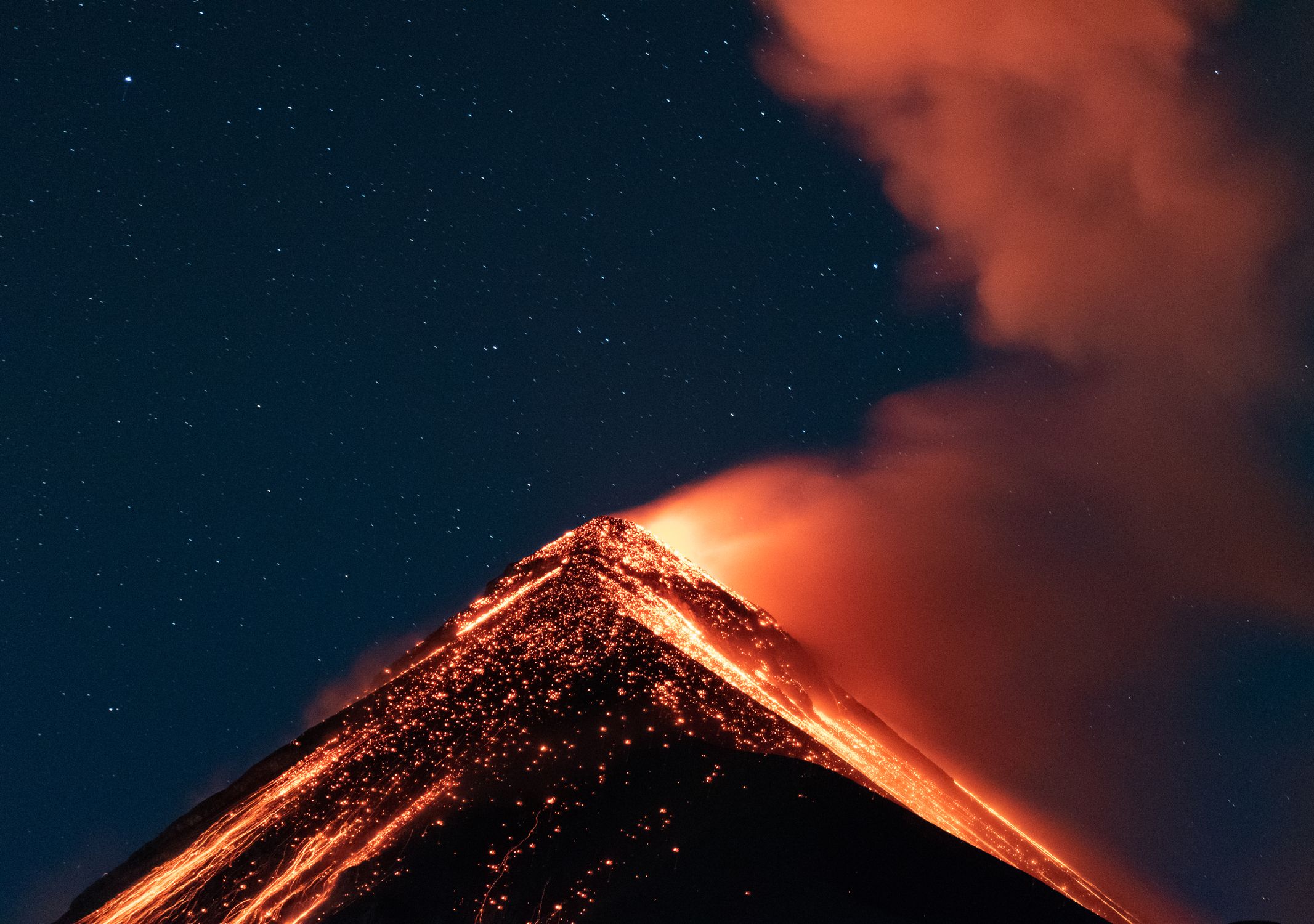 Photo credit on Pexels
9. Hekla, Iceland
Hekla, known in medieval times as the “Gateway to Hell,” is one of Iceland’s most active volcanoes. The summit hike (1,491 meters) takes you across glacial ice and volcanic ash fields with views that encompass the vast Icelandic highlands.
Height: 1,491 meters Difficulty: Moderate-Hard (weather dependent, snow/ice fields, remote) Cost: Self-guided (free) or guided tours from $150-250 per person Best season: June through September (24-hour daylight) Getting there: 2 hours east of Reykjavik Where to stay: Reykjavik hostels from $30. Nearby guesthouses from $60. Important: Iceland’s weather can change dramatically in minutes. Never hike Hekla without checking conditions and leaving a detailed trip plan.
10. Villarrica, Chile
Villarrica (2,847 meters) is one of the most climbed volcanoes in South America. The summit crater contains a permanent lava lake, making it one of only five volcanoes on Earth with this feature. The climb takes 4-6 hours up ice and volcanic rock, with the reward of peering into a bubbling, glowing lava lake. Height: 2,847 meters Difficulty: Moderate-Hard (crampons and ice axe required, steep ice sections) Cost: Guided climb from $80-150 per person (all equipment included) Best season: December through March (Southern Hemisphere summer) Getting there: Pucon is the gateway town, 7 hours south of Santiago Where to stay: Pucon has hostels from $12 per night and hotels from $30.
Safety Considerations for Volcano Trekking
Active vs. Dormant vs. Extinct
- Active: Has erupted recently and could erupt again. All volcanoes on this list are active.
- Dormant: Has not erupted recently but could potentially.
- Extinct: No expected future eruptions.
Before You Go
- Check volcanic activity status: Websites like the Smithsonian’s Global Volcanism Program provide current activity reports for all volcanoes worldwide.
- Follow local authority guidance: If authorities have closed a volcano or restricted access, respect it. These decisions are based on monitoring data.
- Hire a guide when required: Guides know the terrain, understand the risks, and carry safety equipment.
- Bring a gas mask: For volcanoes with sulfurous emissions (Ijen, Etna summit, Stromboli), a gas mask or at least a filter mask is essential.
- Wear appropriate footwear: Volcanic rock is sharp and unstable. Sturdy hiking boots with ankle support are mandatory.
Volcanic Hazards
- Volcanic gases: SO2, CO2, and H2S can accumulate in low-lying areas and craters. Stay upwind and carry a mask.
- Unstable terrain: Loose volcanic rock and ash create unpredictable footing.
- Sudden eruptions: Even “routine” volcanoes can produce unexpected eruptions. Know the escape routes.
- Altitude: Several volcanoes on this list are above 4,000 meters. Acclimatize properly.
Cost Comparison
| Volcano | Country | Guided Cost | Accommodation | Total Trip |
|---|---|---|---|---|
| Bromo | Indonesia | $30-50 | $8-15/night | $50-80 |
| Ijen | Indonesia | $15-30 | $10-20/night | $30-60 |
| Pacaya | Guatemala | $15-30 | $6-15/night | $25-55 |
| Etna | Italy | $80-120 | $15-50/night | $100-180 |
| Stromboli | Italy | $25-35 | $30-60/night | $60-100 |
| Tongariro | New Zealand | $40-50 | $25-40/night | $70-100 |
| Villarrica | Chile | $80-150 | $12-30/night | $100-190 |
| Cotopaxi | Ecuador | $200-400 | $15-30/night | $250-470 |
Essential Gear for Volcano Trekking
Volcanic terrain has specific gear requirements that differ from standard hiking:
Footwear
Volcanic rock is abrasive and will shred lightweight trail runners. Sturdy hiking boots with thick soles and ankle support are recommended. For snow and ice covered volcanoes (Cotopaxi, Villarrica), mountaineering boots compatible with crampons are required.
Respiratory Protection
Volcanic gases (sulfur dioxide, hydrogen sulfide, carbon dioxide) can range from unpleasant to lethal. For volcanoes with active fumaroles (Ijen, Etna summit), carry a mask. A simple N95 mask helps with particulates. For volcanoes with heavy sulfur emissions, a half-face respirator with acid gas cartridges provides proper protection. Many guided tours provide masks, but bringing your own ensures a proper fit.
Sun Protection
Many volcanoes are above the tree line, exposing you to intense UV radiation. The combination of altitude and reflective surfaces (snow, light-colored ash) amplifies UV exposure significantly. Bring SPF 50+ sunscreen, UV-blocking sunglasses, and a brimmed hat. Apply sunscreen generously, including under the chin and on the ears.
Layers
Volcanoes create their own microclimates. You might start a trek in tropical heat at the base and reach freezing temperatures near the summit. A versatile layering system with a wind-proof outer layer is essential. For night treks (Ijen, Stromboli), bring extra warmth since standing on a crater rim in the dark with no physical exertion causes rapid cooling.
Multi-Volcano Itineraries
For the truly volcano-obsessed, several regions allow you to climb multiple volcanoes in a single trip:
Java, Indonesia (1 week)
- Day 1-2: Mount Bromo sunrise and crater walk
- Day 3: Travel day
- Day 4: Kawah Ijen blue fire night trek
- Day 5-6: Mount Semeru trek (the highest on Java, 3,676m, 2-day climb)
- Day 7: Recovery and departure
Budget: $300-500 all-inclusive for the week
Central America Volcano Circuit (2 weeks)
- Guatemala: Pacaya, Acatenango (overnight camp with views of erupting Fuego), Lake Atitlan volcanoes
- El Salvador: Santa Ana Volcano (sulfurous crater lake)
- Costa Rica: Arenal area, Poas Volcano (drive-up crater)
Budget: $600-1,000 for two weeks
Italian Volcanic Trail (1 week)
- Sicily: Mount Etna (day hike or guided summit)
- Aeolian Islands: Stromboli (overnight hike to see eruptions)
- Optional: Vulcano Island (fumaroles and mud baths)
Budget: $500-900 for one week
Walking on active volcanoes connects you to the raw, creative power of the planet. For more incredible trekking, see our guide to hiking the world’s most epic trails on a budget in a way that few other experiences can. The landscapes are alien, the sensory experience is overwhelming, and the knowledge that you are standing on one of Earth’s most dynamic natural systems adds an edge that no theme park could ever replicate.
Choose your volcano, check the eruption status, lace up your boots (our adventure gear guide covers volcanic trekking essentials), and step onto the living earth. Just remember: the mountain decides when you climb. Always respect its power.
Related Reading
Get the best ThrillStays tips in your inbox
Weekly guides, deals, and insider tips. No spam, unsubscribe anytime.