Trail Running Destinations: Best Ultra Routes 2026
Discover the world's best trail running destinations, from UTMB in Chamonix to desert ultras in Namibia. Training tips, race calendars, and travel planning.

This post may contain affiliate links. Disclosure
Trail running strips away the complexity of modern life and replaces it with something beautifully simple: you, a trail, and the rhythm of your feet on dirt. Whether you are logging easy miles through local woods or pushing your limits in a 100-mile mountain ultramarathon, trail running connects you to landscape in a way that no other activity can match.
The global trail running community has exploded in recent years. What was once a niche pursuit of masochistic mountain athletes has become a mainstream adventure sport with a massive international following. In 2026, there are more destination races, supported trail running trips, and purpose-built trail networks than ever before. This guide covers the best trail running destinations on Earth, whether you want to race, train, or simply explore stunning landscapes on foot at a pace faster than walking.
Chamonix, France: The Spiritual Home of Trail Running
Chamonix is to trail running what Wimbledon is to tennis. The Ultra-Trail du Mont-Blanc (UTMB), held each August, is the most prestigious trail race in the world, drawing 10,000+ runners from over 100 countries to circumnavigate the Mont Blanc massif across France, Italy, and Switzerland.
But you do not need to run the UTMB to experience Chamonix’s trails. The valley offers hundreds of kilometers of marked trails through alpine meadows, over high mountain passes, and along ridgelines with views of Western Europe’s highest peak. The infrastructure for trail runners is excellent, with mountain huts, cable cars for accessing high-altitude trails, and a community that lives and breathes the sport.
Signature route: Tour du Mont Blanc (170km, 10,000m elevation gain, typically run in stages over 4-7 days) Best for: All levels, from casual trail runners to ultramarathon competitors Season: June through September. UTMB week is typically late August. Where to stay: Hostels from 25-35 euros per night. Mountain huts (refuges) from 35-60 euros including half-board. Hotels from 80 euros. Daily budget: 50-80 euros (budget), 120-200 euros (comfort)
Pro Tip: If the UTMB lottery eludes you, consider the OCC (55km), CCC (101km), or TDS (145km) races that run during the same UTMB week. They use portions of the same incredible trail system with smaller, less competitive fields.
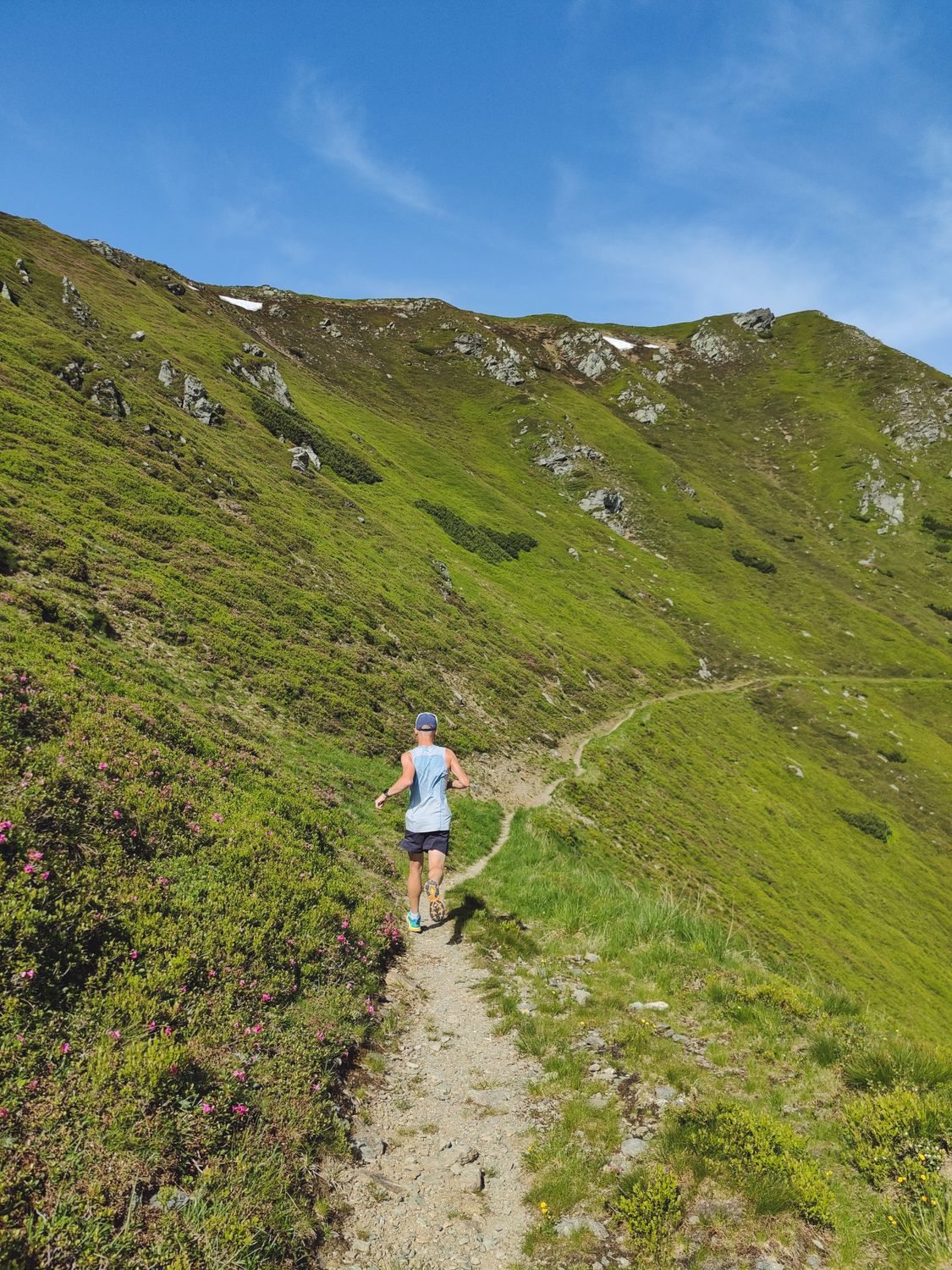 Photo credit on Pexels
Queenstown, New Zealand: Southern Hemisphere Paradise
Queenstown’s network of trails ranges from lakeside paths to exposed alpine ridgelines, all set against a backdrop of snow-capped mountains, pristine lakes, and lush rainforest. The Routeburn Track, one of New Zealand’s Great Walks, is a trail runner’s dream: 32 kilometers through some of the most spectacular scenery on Earth. The Tarawera Ultramarathon near Rotorua and the Queenstown Marathon attract international runners, while dozens of smaller events and casual running groups keep the scene vibrant year-round.
Signature route: Routeburn Track (32km one-way, typically run in 4-8 hours) Best for: All levels Season: November through April (Southern Hemisphere summer) Where to stay: Hostels from $30-45 NZD. Mountain huts along the Routeburn from $55-75 NZD (book in advance). Daily budget: $60-80 NZD (budget), $120-180 NZD (comfort)
Zermatt, Switzerland: Running Beneath the Matterhorn
Zermatt offers some of the most dramatic trail running in the Alps. The car-free village sits at the base of the Matterhorn, and the trail network radiates outward through high alpine terrain with views of more than 30 peaks over 4,000 meters. The Matterhorn Ultraks race (held in August) is a premier European trail race with distances from 16km to 50km, all with the iconic Matterhorn as a constant companion.
Signature route: Five Lakes Trail (9km, moderate, stunning mountain lake scenery) Best for: Intermediate to advanced (high altitude, technical terrain) Season: June through September Where to stay: Zermatt Youth Hostel from 45 CHF. Hotels from 100 CHF. Budget tip: stay in Tasch (5km away, accessible by shuttle train) for lower prices. Daily budget: 70-100 CHF (budget), 150-250 CHF (comfort)
Sedona, Arizona, USA: Red Rock Running
Sedona’s red rock trails offer a surreal running experience. The sandstone formations glow orange and crimson, especially in the golden light of early morning and late afternoon. Over 400 miles of trails weave through canyons, mesas, and forest, with terrain ranging from smooth dirt paths to technical rock scrambles. The Sedona Marathon and Half Marathon (February) takes runners through the most spectacular sections of the trail network. The climate is ideal for running from October through April, with mild temperatures and low humidity.
Signature route: Cathedral Rock to Bell Rock connector (various distances, 10-20km) Best for: All levels Season: October through April (summer is too hot for comfortable running) Where to stay: Hostels and budget motels from $60 per night. Camping at Manzanita Campground from $22 per night. Daily budget: $50-80 (budget), $100-180 (comfort)
 Photo credit on Pexels
Madeira, Portugal: The Atlantic Island Paradise
Madeira is an emerging trail running powerhouse. This Portuguese island in the Atlantic Ocean is crisscrossed by an ancient network of irrigation channels (levadas) that have been converted into hiking and running trails. The levada trails wind along cliff faces, through tunnels, and across lush subtropical valleys. The Madeira Island Ultra Trail (MIUT) is a 115km race that traverses the entire island from one end to the other, climbing nearly 7,000 meters through cloud forest, volcanic ridgelines, and coastal cliffs. It is consistently rated one of the best ultra-trail races in the world.
Signature route: Pico do Arieiro to Pico Ruivo ridge run (7km one-way, spectacular mountain views) Best for: Intermediate to advanced (technical, exposed terrain) Season: Year-round (subtropical climate). MIUT is held in April. Where to stay: Hostels from 20 euros per night. Hotels from 40 euros. Funchal (the capital) has the most options. Daily budget: 40-60 euros (budget), 80-130 euros (comfort)
Iten, Kenya: Running with Champions
Iten is the high-altitude training hub that has produced a disproportionate number of the world’s greatest distance runners. Sitting at 2,400 meters elevation in the Kenyan Highlands, the town offers perfect training conditions: moderate temperatures, red-dirt trails, and an atmosphere that practically radiates running culture. Several training camps welcome visiting runners, providing accommodation, meals, and the opportunity to train alongside Kenyan athletes. It is a transformative experience that will change your understanding of the sport.
Signature route: Iten to Tambach escarpment (25km, rolling red-dirt roads with dramatic views) Best for: Serious runners seeking altitude training and cultural immersion Season: Year-round (avoid heavy rains in April-May) Where to stay: Training camps from $30-80 per night including meals and training access. Budget guesthouses from $10 per night. Daily budget: $20-40 (budget), $50-100 (comfort/training camp)
Everest Trail Race, Nepal
The Everest Trail Race is a six-day stage race that takes runners through the Khumbu Valley in the shadow of the world’s highest peak. The race covers approximately 160 kilometers with over 24,000 meters of elevation change, with the highest point reaching over 5,400 meters. This is not a race for beginners. The altitude, terrain, and multi-day format demand exceptional fitness and mountain experience. But for those who can handle it, running beneath Everest, Lhotse, and Ama Dablam is a once-in-a-lifetime experience.
Best for: Experienced ultra runners Season: November (post-monsoon) Cost: Race entry approximately $2,500-3,000 including accommodation in tea houses and logistics Getting there: Fly to Kathmandu, then to Lukla
Patagonia, Argentina/Chile: End of the World Running
Patagonia’s Torres del Paine and Los Glaciares national parks offer trail running in one of the most dramatic landscapes on Earth. Jagged granite spires, turquoise glacial lakes, and the vast expanse of the Patagonian steppe create a running environment that feels like another planet. The Patagonian International Marathon (held in September) and the Ultra Paine trail race attract international runners, while independent trail running on the W Trek and surrounding trails is accessible year-round.
Signature route: W Trek (80km, typically done as a multi-day hiking trip but can be run in 1-2 days by fit runners) Best for: Intermediate to advanced (weather can be extreme) Season: October through April Where to stay: Refugios from $50-80 per night including meals. Camping from $10-15. Daily budget: $50-80 (budget), $100-200 (comfort)
 Photo credit on Pexels
Red River Gorge, Kentucky, USA
The Red River Gorge in eastern Kentucky offers a different kind of trail running experience: lush Appalachian forest, sandstone arches, and rolling single-track through Daniel Boone National Forest. The terrain is gentler than alpine destinations, making it accessible to runners of all levels. The Red River Gorge Ultramarathon offers 50K and 25K options on some of the region’s best trails. The area is also a world-class rock climbing destination, so you can combine running and climbing in a single trip.
Signature route: Auxier Ridge to Courthouse Rock loop (15km, moderate, stunning arch formations) Best for: All levels Season: March through November Where to stay: Camping from $10 per night. Cabins from $60. Daily budget: $30-50 (budget), $60-100 (comfort)
Training for Your Trail Running Trip
For a Destination 50K (6+ months out)
- Base building (months 1-3): Gradually increase weekly mileage to 50-60km per week with at least one long run per week (15-25km)
- Specificity (months 3-5): Include hill repeats, technical trail running, and back-to-back long run weekends to simulate race-day fatigue
- Taper (month 6): Reduce volume by 40-50% in the final 2-3 weeks while maintaining intensity
- Cross training: Strength training (especially glutes, quads, and core) twice per week throughout
Essential Gear for Trail Running Travel
| Item | Budget Option | Premium Option |
|---|---|---|
| Trail shoes | $80-120 | $130-180 |
| Hydration vest | $40-80 | $100-180 |
| Headlamp | $25-40 | $60-120 |
| Rain jacket | $50-80 | $150-300 |
| Poles (collapsible) | $40-60 | $100-180 |
| GPS watch | $150-250 | $400-600 |
Nutrition Strategy
For runs over 90 minutes, plan to consume 200-300 calories per hour. Options include:
- Energy gels (quick, convenient, but can cause GI issues)
- Real food (dates, potatoes, rice balls, bananas)
- Sports drink mix (electrolytes plus calories)
- Trail mix and bars for multi-hour efforts
Test your nutrition strategy during training, never on race day.
Race Calendar: Major Trail Races in 2026
| Race | Location | Distance | Month |
|---|---|---|---|
| MIUT | Madeira, Portugal | 115km | April |
| Western States 100 | California, USA | 161km | June |
| UTMB | Chamonix, France | 171km | August |
| Matterhorn Ultraks | Zermatt, Switzerland | 50km | August |
| Everest Trail Race | Nepal | 160km (staged) | November |
| Ultra Paine | Patagonia, Chile | 80km | September |
| Tarawera Ultra | Rotorua, NZ | 102km | February |
Recovery and Injury Prevention
Post-Run Recovery Protocol
After a long trail run, proper recovery accelerates healing and prevents injury:
- Immediate (0-30 minutes): Walk for 10 minutes to cool down. Drink 500ml of fluid with electrolytes. Eat a snack with both carbohydrates and protein (chocolate milk is a surprisingly effective recovery drink).
- Short-term (1-6 hours): Eat a full meal. Gentle stretching or foam rolling. Cold water immersion (ice bath) for 10-15 minutes if available. Elevate legs.
- Next 24-48 hours: Easy walking or gentle cycling. Adequate sleep (8+ hours). Continue hydration and good nutrition. Avoid intense exercise.
Common Trail Running Injuries
| Injury | Prevention | Treatment |
|---|---|---|
| Twisted ankle | Strengthen ankles, run on varied terrain | RICE protocol, taping |
| Plantar fasciitis | Calf stretching, proper shoes | Rolling on frozen bottle, rest |
| Runner’s knee | Strengthen quads and glutes | Reduce mileage, physical therapy |
| IT band syndrome | Foam rolling, hip strengthening | Rest, stretching, gradual return |
| Blisters | Proper socks, Leukotape on hot spots | Drain, clean, cover, monitor |
Altitude Considerations for Mountain Races
Many premier trail races take place at significant altitude. If you are traveling from sea level to race above 2,000 meters, plan for acclimatization:
- Arrive 2-3 days early for races at 2,000-3,000 meters
- Arrive 5-7 days early for races above 3,000 meters
- Hydrate aggressively in the days before the race
- Expect reduced performance: At 3,000 meters, you can expect your pace to slow by 10-15% compared to sea level. At 4,000+ meters, expect 20-30% slower.
- Watch for AMS symptoms: Headache, nausea, and dizziness are early signs that should not be ignored
Making the Most of Your Trip
Trail running travel is uniquely rewarding because the sport takes you deep into landscapes that most visitors only see from viewpoints and parking lots. Here are some tips for maximizing your experience:
- Schedule the race near the start of your trip to allow recovery time afterward for exploring
- Build in rest days between big running days to prevent injury and enjoy the destination
- Connect with local running communities through Strava clubs, Facebook groups, or your race’s community
- Respect the trails by staying on marked paths, packing out trash, and yielding to hikers
- Adapt to conditions and review our adventure safety guide such as altitude, heat, or humidity by arriving early and acclimating before your race
Trail running is more than a sport. It is a way of experiencing the world, one foot at a time, at exactly the pace that lets you absorb everything around you. Whether you are chasing a personal best at UTMB or jogging through the red rocks of Sedona at sunrise, these destinations offer the kind of running that stays with you long after your legs have recovered.
Lace up. The trails are waiting. Make sure you have the right gear with our adventure travel packing guide.
Related Reading
Get the best ThrillStays tips in your inbox
Weekly guides, deals, and insider tips. No spam, unsubscribe anytime.