Off-Grid Wilderness Camping: How to Disconnect
Everything you need for wilderness camping off the grid. Gear essentials, meal planning, water purification, navigation, and the best remote campsites worldwide.

This post may contain affiliate links. Disclosure
There is a moment, usually on the second or third night of a wilderness camping trip, when something shifts. The anxiety of disconnection fades. The constant low-grade buzz of notifications, emails, and social media quiets. And in its place, you find something you did not know you were missing: the uncomplicated awareness of being alive in a landscape that does not care about your deadlines.
Off-grid wilderness camping, sometimes called dispersed camping, primitive camping, or backcountry camping, means camping outside of developed campgrounds, without hookups, running water, flush toilets, or cell service. It is just you, your gear, and the wild. And in 2026, as the world gets louder and more connected, the appeal of genuinely unplugging has never been stronger. This guide covers everything you need to know to plan and execute a safe, comfortable, and deeply rewarding off-grid camping experience, whether you are heading out for a single night or a multi-week wilderness expedition.
Choosing Your Destination
Public Lands in the United States
The US has an extraordinary amount of public land where dispersed camping is free and legal:
- Bureau of Land Management (BLM) land: Over 245 million acres, mostly in the western states. Dispersed camping is generally allowed anywhere unless specifically posted otherwise. Free.
- National Forests: 193 million acres managed by the USFS. Dispersed camping is allowed in most areas with a 14-day stay limit. Free (some areas require a free permit).
- State Trust Lands: Regulations vary by state but many allow camping.
Top US Dispersed Camping Destinations:
- Escalante, Utah: BLM land surrounding Grand Staircase-Escalante National Monument offers vast, empty desert with red rock canyons, slot canyons, and zero crowds.
- Sawtooth Mountains, Idaho: National Forest land with alpine lakes, pristine rivers, and jagged peaks. Some of the least-visited wilderness in the Lower 48.
- Boundary Waters, Minnesota: A million acres of lakes and boreal forest accessible only by canoe. Permits required but worth the effort.
- Anza-Borrego Desert, California: State park that allows primitive camping anywhere within its half-million acres. Spring wildflower season is spectacular.
- Gila Wilderness, New Mexico: The first designated wilderness area in the US (1924), featuring hot springs, ancient cliff dwellings, and deep solitude.
International Destinations
- Scottish Highlands: Scotland’s right to roam laws allow wild camping almost anywhere. Stunning lochs, glens, and moorlands.
- Northern Sweden (Allemansratten): Sweden’s everyman’s right allows camping on most land. Midnight sun in summer, northern lights in winter.
- Patagonia, Chile/Argentina: Backcountry camping in Torres del Paine and Los Glaciares national parks. Permits often required.
- New Zealand Conservation Land: DOC (Department of Conservation) manages millions of acres with backcountry huts and campsites from $5-15 NZD per night.
- Mongolian Steppe: Virtually unlimited wild camping on the open grasslands. Utterly remote and profoundly beautiful.
 Photo credit on Pexels
Essential Gear: The Complete Checklist
Shelter System
| Item | Budget | Mid-Range | Premium |
|---|---|---|---|
| Tent (2-person) | $80-150 | $200-350 | $400-700 |
| Sleeping bag (30F) | $60-120 | $150-250 | $300-500 |
| Sleeping pad | $25-50 | $60-120 | $130-200 |
| Tarp/rain fly | $20-40 | $50-80 | - |
Choosing a tent: For wilderness camping, prioritize weather resistance over weight savings. A 3-season tent with a full-coverage rain fly handles most conditions. Look for reinforced seams, quality zippers, and adequate ventilation to prevent condensation. Sleeping bag temperature rating: Choose a bag rated at least 10 degrees below the coldest temperature you expect to encounter. Synthetic fill is cheaper and performs when wet; down fill is lighter and more compressible but loses insulation when damp.
Water Purification
Clean water is your most critical resource in the backcountry. Never drink untreated water from natural sources, even crystal-clear mountain streams can harbor giardia, cryptosporidium, and other pathogens. Purification methods:
- Pump filter (e.g., MSR MiniWorks, Katadyn Hiker): Reliable, effective against bacteria and protozoa. Slower than other methods. $40-100.
- Gravity filter (e.g., Platypus GravityWorks, MSR AutoFlow): Hang it and let gravity do the work. Great for camp use. $60-120.
- Squeeze filter (e.g., Sawyer Squeeze, Katadyn BeFree): Lightweight, fast, and cheap. The go-to for most backpackers. $25-40.
- UV purifier (e.g., SteriPEN): Kills everything including viruses. Requires batteries. $50-100.
- Chemical treatment (iodine tablets, Aquamira drops): Lightweight backup. Takes 30 minutes to work. $8-15.
- Boiling: The most reliable method. Kills everything. Requires fuel and time.
Pro Tip: Always carry a backup purification method. If your primary filter breaks 10 miles from the trailhead, you need a plan B. A few iodine tablets weigh nothing and could save your trip (or your life).
Cooking System
| Item | Budget | Mid-Range | Premium |
|---|---|---|---|
| Stove | $15-30 (canister) | $40-80 | $100-150 |
| Cookware | $15-30 | $40-70 | $80-150 |
| Fuel (per day) | $1-3 | $2-4 | $2-4 |
Stove types:
- Canister stoves (e.g., MSR PocketRocket): Lightest, fastest, easiest. Poor in wind and cold. Best for fair-weather trips.
- Liquid fuel stoves (e.g., MSR WhisperLite): Work in any conditions, any altitude. Heavier. Best for serious expeditions.
- Alcohol stoves: Ultralight, simple, slow. Best for minimalists.
- No stove (cold soaking): Save weight and fuel by eating foods that do not require cooking. Not for everyone, but some backpackers swear by it.
Navigation
In the backcountry, your phone’s GPS may not have cell coverage for maps, and batteries die. Essential navigation tools:
- Paper topographic map of your area (waterproofed or in a waterproof case)
- Baseplate compass (learn to use it before your trip)
- GPS device or phone with offline maps (download maps before departure)
- Satellite communicator (e.g., Garmin InReach): Sends messages and SOS signals without cell coverage. $300-400 for the device, $15-50 per month for the plan. Highly recommended for remote trips.
 Photo credit on Pexels
Meal Planning for Wilderness Camping
Calorie Requirements
Active wilderness camping burns 3,000-5,000 calories per day, depending on the terrain, temperature, and your pack weight. Plan meals accordingly:
- Breakfast: 500-800 calories (oatmeal with nuts and dried fruit, granola, instant coffee)
- Lunch: 500-800 calories (tortillas with nut butter and honey, jerky, trail mix, energy bars)
- Dinner: 800-1,200 calories (dehydrated meals, pasta with olive oil and parmesan, rice and beans)
- Snacks: 500-800 calories throughout the day (nuts, chocolate, dried fruit, energy chews)
Meal Strategies
Dehydrated meals: Brands like Mountain House, Backpacker’s Pantry, and Peak Refuel offer a wide range of just-add-water meals. Convenient but expensive ($8-15 per serving). Best for short trips where weight and simplicity matter. DIY dehydrated meals: If you have a food dehydrator, you can make your own backpacking meals for a fraction of the cost. Dehydrate chili, pasta sauce, rice dishes, and soups at home and rehydrate on the trail.
Real food strategy: For shorter trips (1-3 nights), you can carry real food that stays fresh: hard cheeses, cured meats, tortillas, peanut butter, fresh fruit (apples, oranges), and vegetables (carrots, bell peppers).
Food Storage and Bear Country
In bear country, you must store food properly to avoid dangerous wildlife encounters:
- Bear canister: Required in many areas (Yosemite, parts of the Sierra Nevada, Adirondacks). Heavy but effective. Can be rented at ranger stations ($5-10 per trip).
- Bear hang: Suspend food in a bag from a tree branch at least 12 feet off the ground and 6 feet from the trunk. Requires a rope and some practice.
- Ursack: A lightweight, bear-resistant stuff sack that can be tied to a tree. Accepted in many (but not all) areas that require bear canisters.
Campsite Selection
The Perfect Wilderness Campsite
- Flat ground: Look for naturally flat areas. Avoid setting up on slopes, depressions that could collect water, or high points exposed to wind.
- 200 feet from water: Camp at least 200 feet (about 70 adult paces) from lakes, rivers, and streams to protect water quality and avoid flood risk.
- Shelter from wind: Use natural features (rock walls, dense trees) as windbreaks.
- Dry ground: Avoid areas with standing water, lush grass (which indicates soggy soil), or dried stream beds (flash flood risk).
- Dead tree check: Look up. Dead trees (“widowmakers”) or large dead branches above your campsite pose a real danger in wind.
Leave No Trace Principles
Wilderness camping comes with a responsibility to leave the landscape as you found it:
The Leave No Trace Center for Outdoor Ethics defines seven principles every wilderness camper should follow:
- Plan ahead and prepare
- Travel and camp on durable surfaces
- Dispose of waste properly (pack out everything; bury human waste in 6-8 inch catholes at least 200 feet from water)
- Leave what you find
- Minimize campfire impacts (use a stove when possible; if you must have a fire, use an existing fire ring)
- Respect wildlife (store food properly, keep distance)
- Be considerate of other visitors
Power and Electronics in the Backcountry
Portable Power Options
| Device | Weight | Capacity | Best For |
|---|---|---|---|
| Phone-sized power bank (5,000mAh) | 4 oz | 1-2 phone charges | Weekend trips |
| Mid-size power bank (10,000mAh) | 7 oz | 2-4 phone charges | Week-long trips |
| Folding solar panel (10W) | 12 oz | Continuous recharge | Extended trips |
| Larger power station (300Wh) | 7 lbs | Multiple device charges | Car camping/base camp |
Pro Tip: Put your phone in airplane mode during the day and only turn it on to take photos or check maps. This extends battery life dramatically. A phone in airplane mode can last 3-4 days on a single charge.
Weather and Safety
Pre-Trip Weather Planning
Check forecasts from multiple sources before departure:
- Weather.gov (US): Most accurate forecasts for outdoor recreation
- Mountain-forecast.com: Altitude-specific forecasts for mountain areas
- Windy.com: Excellent visualization of wind, precipitation, and temperature patterns
Emergency Preparedness
| Emergency Item | Weight | Purpose |
|---|---|---|
| First aid kit | 8-16 oz | Treat injuries |
| Emergency bivvy | 3 oz | Emergency shelter |
| Fire starter (waterproof matches + lighter) | 2 oz | Emergency warmth |
| Signal mirror and whistle | 1 oz | Attract attention |
| Satellite communicator | 4 oz | SOS and communication |
Common Wilderness Hazards
- Hypothermia: The number one killer in the outdoors. Recognize the symptoms (shivering, confusion, slurred speech) and act immediately (shelter, dry clothes, warm drinks).
- Dehydration: Drink at least 3-4 liters per day when active. More in heat or at altitude.
- Lightning: If thunderstorms approach, descend from ridgelines and peaks. Avoid isolated trees. Crouch in a low area if caught in the open.
- Wildlife: Most wildlife encounters are resolved by giving animals space. Store food properly and never approach, feed, or provoke wild animals.
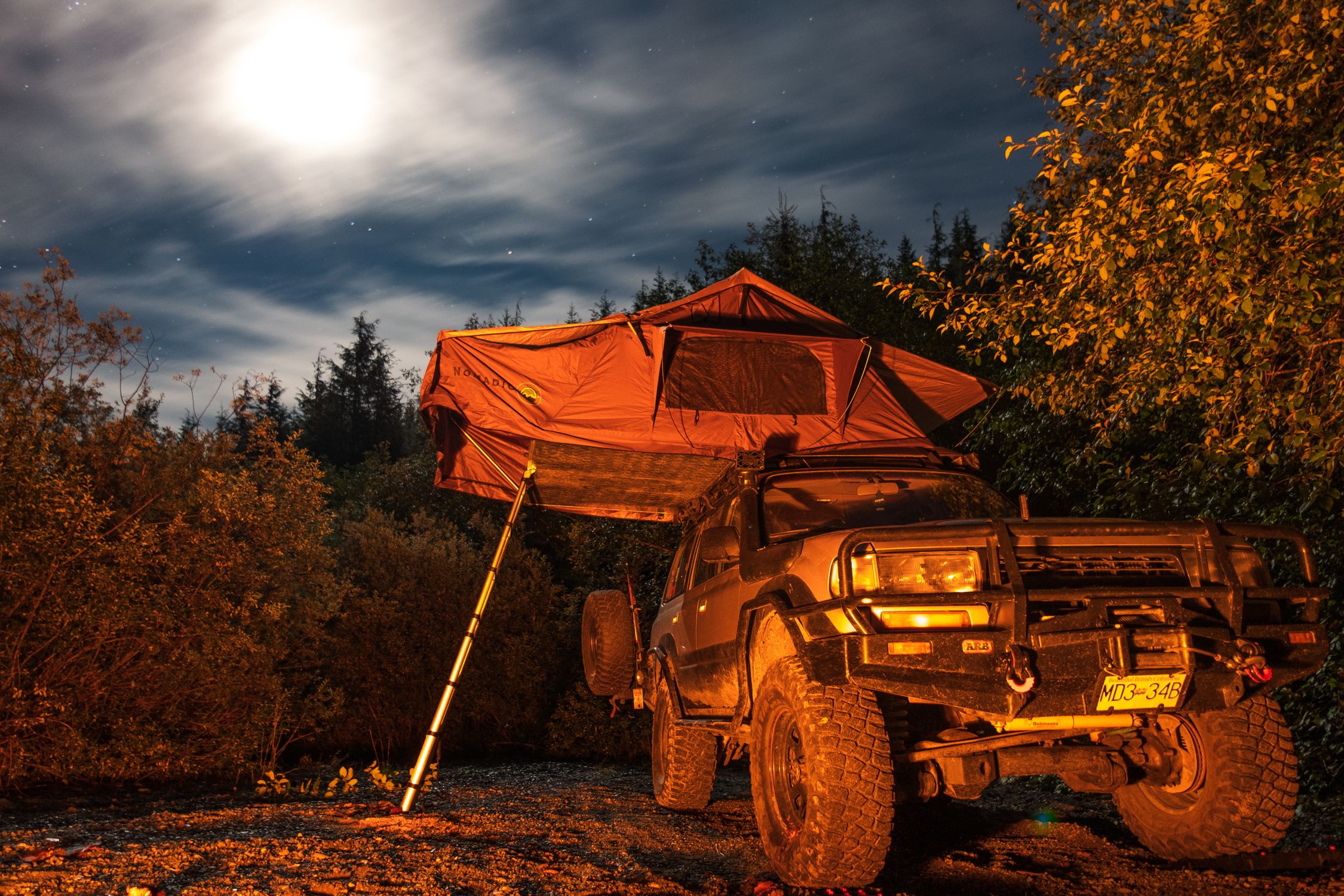 Photo credit on Pexels
Building Your Skills: Progression for Beginners
Level 1: Car Camping (No Experience Required)
Drive to a campground, set up your tent 50 feet from your car, and practice the basics: setting up shelter, cooking on a camp stove, sleeping outside. This is where you learn whether your gear works before heading into the backcountry.
Level 2: Developed Campground Backpacking
Hike 3-5 miles to a designated backcountry campsite with an established fire ring and access to a privy or bear box. This introduces the challenge of carrying everything on your back while maintaining the safety net of a known, maintained site.
Level 3: Dispersed Camping (Day Hike Distance)
Camp at an undeveloped site 5-10 miles from the trailhead. You choose your own campsite, filter your own water, and manage your own waste. This is genuine wilderness camping.
Level 4: Multi-Day Wilderness Expedition
Three or more nights in the backcountry, navigating between unmarked campsites, managing food resupply, and adapting to changing weather. This is the full experience.
Budget Breakdown: What Wilderness Camping Actually Costs
Startup Gear Investment
| Budget Level | Total Gear Cost | Quality | Durability |
|---|---|---|---|
| Budget | $300-500 | Adequate | 1-3 years |
| Mid-Range | $600-1,200 | Good | 3-7 years |
| Premium | $1,500-3,000 | Excellent | 7-15 years |
Per-Trip Costs
| Expense | Cost |
|---|---|
| Campsite (dispersed) | Free |
| Fuel (per day) | $2-4 |
| Food (per day) | $8-15 |
| Permits (if required) | $0-15 |
| Gas to trailhead | Variable |
| Daily total | $10-35 |
Compare that to the average cost of a hotel night ($150+) and restaurant meals ($40-80 per day), and wilderness camping starts looking like one of the best travel values on the planet.
The Real Value of Off-Grid Camping
The gear lists and logistics are important, but the real reason to go wilderness camping is something harder to quantify. It is the sound of a river at night. It is the way a campfire smells. It is waking up to frost on your tent and watching the first rays of sunlight turn a mountain peak gold.
Off-grid camping reconnects you to the rhythms of the natural world. Before disconnecting completely, review our adventure travel safety guide to prepare for emergencies: sunrise and sunset, weather and wind, the slow passage of time measured in miles walked rather than emails read. In a world that is constantly demanding your attention, choosing to unplug and step into the wild is one of the most radical and rewarding things you can do.
Pack your bag. Head for the trailhead. Many of the world’s most epic hiking trails offer outstanding wilderness camping opportunities. Leave the world behind, even if just for a night. The wilderness is waiting, and it has everything you need.
Related Reading
Get the best ThrillStays tips in your inbox
Weekly guides, deals, and insider tips. No spam, unsubscribe anytime.