Colombia Adventure Travel Guide 2026
The complete Colombia adventure travel guide for 2026. Lost City trek, paragliding, diving, caving, and whitewater from the Andes to the Caribbean coast.
This post may contain affiliate links. Disclosure
Colombia Adventure Travel Guide 2026
Updated for 2026 — Accurate as of February 2026.
Colombia has transformed from a country most travelers avoided to one of the most exciting adventure destinations in South America. The transformation is genuine and ongoing: improved security, massive infrastructure investment, a booming tourism industry, and a national energy that makes Colombia feel like a country that is going somewhere. The adventure opportunities match the ambition.
The geography is extraordinary. Colombia is the only South American country with both Caribbean and Pacific coastlines. The Andes split into three ranges as they enter the country from the south, creating dramatic valleys, high-altitude plateaus, and snow-capped peaks. The Amazon basin covers the southeast. The Llanos (vast tropical grasslands) stretch to the Venezuelan border. And the Sierra Nevada de Santa Marta, the world’s highest coastal mountain range, rises from Caribbean beaches to 5,775-meter peaks in just 42 km, creating one of the most compressed ecological gradients on Earth.
I spent a month in Colombia in 2025, and the adventure experiences available here rival anything in the Americas: multi-day jungle treks to ancient ruins, world-class paragliding, Caribbean diving, whitewater rafting through Andean canyons, and caving through some of the largest caves in South America. All at prices that make Colombia one of the best-value adventure destinations on the continent.
The Lost City Trek (Ciudad Perdida)
The Lost City (Ciudad Perdida) is a 1,200-year-old settlement built by the Tairona civilization in the Sierra Nevada de Santa Marta, predating Machu Picchu by approximately 650 years. The ruins sit at 1,200 meters elevation in dense tropical jungle, accessible only by a 4-day round-trip trek through the mountains.
The trek is one of the great adventure experiences in South America. The trail follows the Buritaca River through tropical forest, crossing the river multiple times (sometimes waist-deep), climbing steep stone staircases carved into the hillside, and passing through indigenous Kogi and Wiwa communities whose ancestors built the city. On day three, you climb the famous 1,200 stone steps to the city itself: a series of circular terraces carved into the mountainside, connected by stone paths and surrounded by jungle.
Distance: 44 km round trip Duration: 4 days / 3 nights (some operators offer a 5-day version) Difficulty: Moderate to challenging (humidity, river crossings, steep climbs, heat) Cost: All-inclusive guided treks from 350-450 USD per person (guide, food, hammock accommodation in jungle camps, park fees). This is the only way to do the trek; independent trekking is not permitted. Best season: December through March and July through August (driest months). The trek operates year-round but can be muddy and difficult during the wet season (April-June, September-November). Where to start: Santa Marta on the Caribbean coast Getting there: Fly to Santa Marta (SMR) from Bogota or Medellin.
Pro Tip: Book with Expotur, Wiwa Tour, or Magic Tour Colombia. All operators follow the same route and use the same camps. The main differences are group size and guide quality. Ask for a small group (maximum 12 people).
Paragliding in San Gil and the Chicamocha Canyon
San Gil is the adventure sports capital of Colombia, and paragliding over the Chicamocha Canyon is the signature experience. The canyon is 227 km long, up to 2 km deep, and dramatically carved by the Chicamocha River through the Andean plateau. Tandem paragliding flights launch from the canyon rim and soar over this immense landscape, riding thermals that can keep you aloft for 30-60 minutes.
The conditions for paragliding in San Gil are exceptional: consistent thermal activity, reliable winds, and a launch site that provides immediate altitude gain over the canyon. Colombia is becoming a world-class paragliding destination, and the Chicamocha Canyon is its flagship site.
Cost: Tandem paragliding flights from 150,000-200,000 COP (35-50 USD). Yes, you can paraglide over a 2 km deep canyon for the price of a moderate restaurant meal in Europe. Duration: 15-40 minutes flight time (depending on conditions) Other adventure activities in San Gil: Whitewater rafting (Fonce and Suarez rivers, from 60,000 COP / 15 USD for a half-day trip), caving (Cueva del Indio, from 30,000 COP / 7 USD), bungee jumping (from 70,000 COP / 17 USD), canyoning (from 80,000 COP / 20 USD) Where to stay: San Gil has hostels from 25,000 COP (6 USD) and hotels from 60,000 COP (15 USD) Getting there: Bus from Bogota (6-7 hours, from 40,000 COP / 10 USD) or from Bucaramanga (2.5 hours).
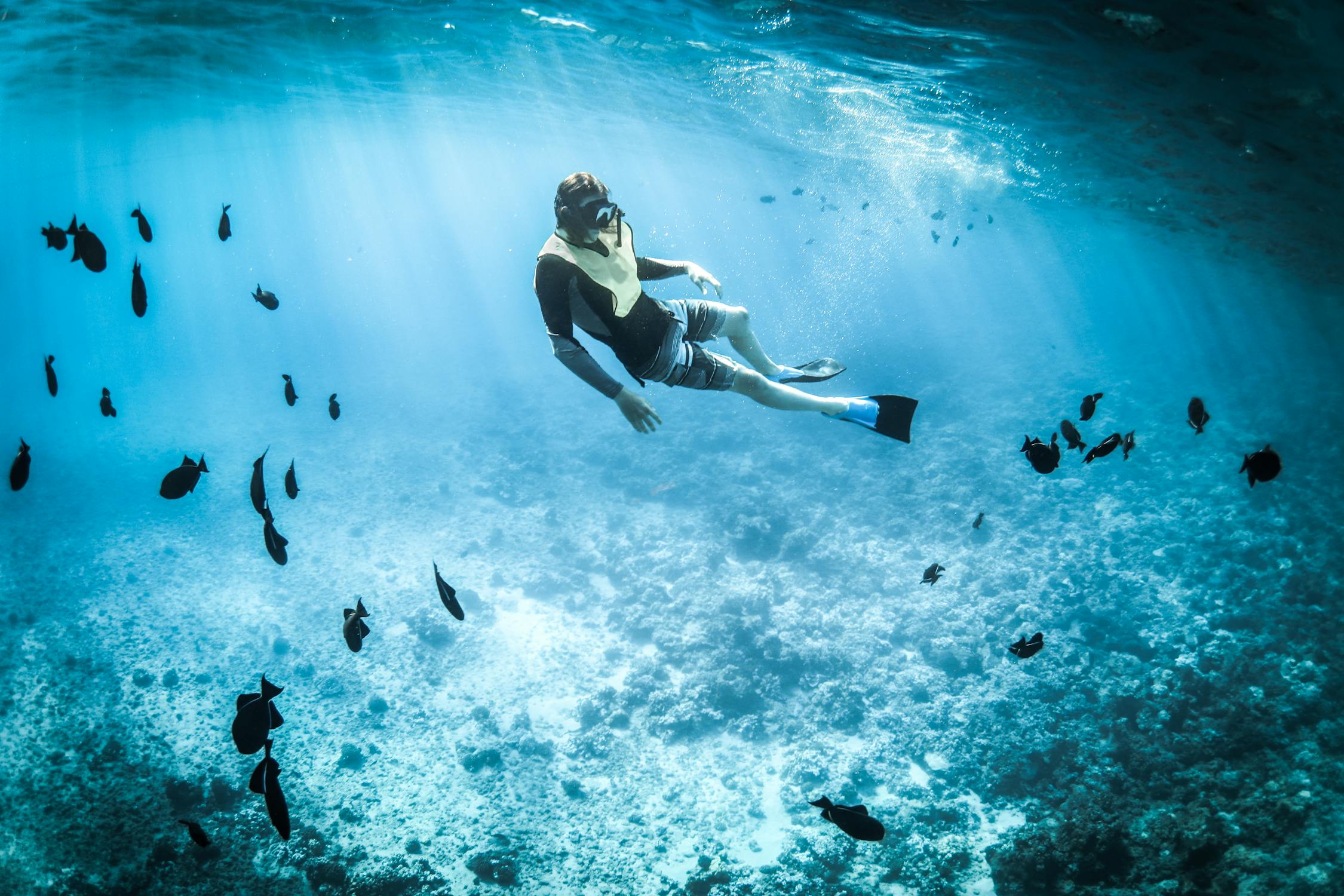 Photo credit on Pexels
Caribbean Diving and Snorkeling
Colombia’s Caribbean coast offers excellent diving at a fraction of Caribbean island prices.
San Andres and Providencia Islands
Providencia, a small island 775 km northwest of the Colombian mainland, is surrounded by the UNESCO-listed Seaflower Biosphere Reserve, one of the largest barrier reefs in the Americas. The diving is world-class: steep walls, swim-throughs, abundant marine life, and visibility of 30-40 meters. The island was significantly damaged by Hurricane Iota in 2020 but has rebuilt and the reef is recovering well.
Cost: Two-tank dives from 200,000 COP (50 USD). PADI Open Water certification from 800,000 COP (200 USD). Best season: February through June (calmest seas) Getting there: Fly to San Andres (ADZ) from Bogota, then short flight or catamaran to Providencia.
Taganga and Tayrona
The coast near Santa Marta offers good diving at budget prices. Taganga, a former fishing village, has dive shops offering two-tank dives from 150,000 COP (35 USD). The nearby Tayrona National Park offers snorkeling in clear Caribbean water at pristine beaches.
Cocora Valley: Giant Wax Palms
The Cocora Valley in the coffee region (Eje Cafetero) is home to the wax palm, Colombia’s national tree and the tallest palm species in the world, reaching heights of 60 meters. Hiking through the valley among these impossibly tall, slender palms rising from misty green hillsides is a surreal and photogenic experience.
Activities: Day hiking through the valley (4-6 hours, 15,000 COP / 4 USD entry), horseback riding (from 50,000 COP / 12 USD), coffee farm tours in nearby Salento (from 20,000 COP / 5 USD) Where to stay: Salento, a colorful coffee town, has hostels from 25,000 COP (6 USD) Getting there: Bus from Armenia or Pereira (1 hour), then jeep to the valley trailhead
Whitewater Rafting
Colombia’s Andean rivers offer whitewater rafting ranging from family-friendly Class II-III to expert-level Class IV-V. The main rafting destinations:
Rio Fonce (San Gil): Class II-III, perfect for beginners. Half-day trips from 60,000 COP (15 USD). Rio Suarez (San Gil): Class III-IV, for those wanting more adrenaline. Full-day trips from 100,000 COP (25 USD). Rio Negro (near Bogota): Class III-IV, accessible as a day trip from the capital. From 120,000 COP (30 USD).
Caño Cristales: The Rainbow River
Caño Cristales, in the remote Serrania de la Macarena region, is known as the “River of Five Colors” because aquatic plants turn the river red, yellow, green, blue, and black, creating a kaleidoscopic effect that looks like liquid rainbows flowing over rock. The phenomenon occurs only from June through November when conditions are right.
Visiting requires a guided tour (independent travel is not permitted) and a flight to La Macarena.
Cost: All-inclusive 3-day packages from 700,000-1,200,000 COP (175-300 USD) including flights from Bogota, accommodation, food, guide, and park fees Best season: June through November (peak color August-September) Getting there: Fly from Bogota or Villavicencio to La Macarena
Trekking in Los Nevados National Park
Los Nevados National Park in the central Andes, managed by Colombia’s National Parks Service, contains several snow-capped volcanic peaks, including Nevado del Ruiz (5,321m), which erupted catastrophically in 1985. The park offers multi-day trekking through paramo (high-altitude tropical grassland), hot springs, and volcanic terrain, with the possibility of summiting Santa Isabel (4,950m) or approaching Nevado del Tolima (5,215m).
Activities: Day hikes through the paramo (from 80,000 COP / 20 USD with guide), multi-day treks (3-4 days, from 500,000 COP / 125 USD), thermal hot springs at Termales de Santa Rosa Best season: December through February, July through August Where to stay: Manizales or Pereira have hostels from 25,000 COP (6 USD)
Budget Breakdown
Colombia is one of the most affordable adventure destinations in the Americas:
| Expense | Budget (per day) | Mid-Range (per day) |
|---|---|---|
| Hostel dorm | 25,000-40,000 COP (6-10 USD) | N/A |
| Private room | N/A | 80,000-150,000 COP (20-37 USD) |
| Meals | 25,000-40,000 COP (6-10 USD) | 50,000-80,000 COP (12-20 USD) |
| Transport | 20,000-40,000 COP (5-10 USD) | 40,000-80,000 COP (10-20 USD) |
| Activities | 30,000-100,000 COP (7-25 USD) | 100,000-300,000 COP (25-75 USD) |
| Daily Total | 100,000-220,000 COP (25-55 USD) | 270,000-610,000 COP (67-152 USD) |
Bogota: Gateway Adventures
Most international flights arrive in Bogota, and while the city itself is not an adventure destination, several excellent day trips and short excursions are available:
Suesca Rock Climbing: 1.5 hours north of Bogota, the Suesca canyon offers over 400 sport climbing routes on sandstone cliffs ranging from 5.4 to 5.14. It is the most developed crag in Colombia and accessible as a day trip. Guided climbing from 100,000 COP (25 USD) per person including gear.
Chingaza National Park: A paramo ecosystem at 3,000-4,000m, just 2 hours from Bogota. Hike through misty highland grasslands, past glacial lakes, and through cloud forest. The park protects Bogota’s water supply and is home to spectacled bears and Andean condors. Entry 23,000-54,000 COP. Guide required.
La Chorrera Waterfall: At 590 meters, this is the tallest waterfall in Colombia and the second-tallest in South America. A 4-hour hike through cloud forest leads to the multi-tiered cascade. Day trips from Bogota from 120,000 COP (30 USD) per person.
Salt Cathedral of Zipaquira: An underground cathedral carved inside a salt mine at 180 meters below ground. Not strictly an adventure activity, but the subterranean architecture is genuinely awe-inspiring. 1.5 hours from Bogota. Entry from 70,000 COP.
Best Time to Visit Colombia
Colombia’s weather varies by region rather than by season (it sits near the equator). General guidelines:
Caribbean Coast (Santa Marta, Cartagena): Driest December through April. Hot year-round (28-32 degrees). Andes (Bogota, Medellin, Coffee Region): Drier December through February and July through August. Mild (15-25 degrees depending on altitude). Pacific Coast: Wet year-round. Best December through March. Amazon: Wettest April through June. Driest July through October.
Colombia can be visited year-round. The busiest tourist period is December through January (Colombian school holidays and Semana Santa).
Practical Information
Visa: Most nationalities (US, EU, UK, Canada, Australia) can enter Colombia visa-free for 90 days, extendable to 180 days.
Safety: Colombia is much safer than its reputation suggests, but smart precautions are still necessary. Avoid displaying expensive items. Use Uber or registered taxis. Avoid walking alone at night in unfamiliar areas. The adventure destinations in this guide are generally safe, with the caveat that some remote areas still have a guerrilla or narco-trafficking presence. Use reputable tour operators who know the current security situation.
Health: Yellow fever vaccination is recommended (and may be required if arriving from a yellow fever-endemic country) per the CDC’s Colombia travel advisory. Malaria prophylaxis for Amazon and Pacific coast areas. Altitude sickness is possible above 2,500m (Bogota is at 2,640m).
Language: Spanish. English is not widely spoken outside of tourist areas in major cities. Learning basic Spanish will dramatically improve your experience.
Currency: Colombian peso (COP). 1 USD = approximately 4,000 COP. ATMs widely available. Credit cards accepted in cities and tourist areas.
The Best 3-Week Colombia Adventure Itinerary
Days 1-3: Bogota - Acclimatize to altitude, day trip to Suesca climbing or Chingaza National Park. Days 4-7: San Gil - Paragliding over Chicamocha Canyon, whitewater rafting on Rio Fonce and Suarez, caving, canyoning. Days 8-9: Coffee Region - Bus to Armenia, Cocora Valley hike among giant wax palms, coffee farm tour in Salento. Days 10-11: Medellin - City day, paragliding from nearby mountains (from 150,000 COP / 37 USD with views over the city). Days 12-15: Lost City Trek - Fly to Santa Marta, 4-day trek to Ciudad Perdida. Days 16-17: Tayrona National Park - Hike the coastal trail through jungle to pristine Caribbean beaches. Camp or stay in eco-habs. Park entry 74,000 COP (18 USD). Days 18-20: Providencia Island - Fly from Santa Marta (via San Andres) to Providencia for world-class diving and snorkeling. Day 21: Return to Bogota for departure.
This itinerary covers Colombia’s adventure highlights from the Andes to the Caribbean at a total cost (excluding international flights) of approximately 2,000-3,500 USD for 21 days, making Colombia one of the best-value adventure destinations in the Americas.
Internal Transport Tips
Colombia is large and mountainous, which means overland travel can be slow. Here are the most efficient ways to get between adventure destinations:
Domestic flights: Airlines like Avianca, LATAM, and Viva Air connect major cities with frequent, affordable flights. Bogota to Santa Marta from 120,000 COP (30 USD) if booked in advance. Bogota to Medellin from 80,000 COP (20 USD). Always book directly through airline websites for the best prices.
Overnight buses: Colombia’s bus network is extensive and comfortable. The premium bus companies (Bolivariano, Berlinas del Fonce) offer reclining seats, air conditioning, and on-board entertainment. Bogota to San Gil from 45,000 COP (11 USD, 7 hours). Santa Marta to Cartagena from 35,000 COP (9 USD, 5 hours).
Collectivos and chivas: In rural areas, shared jeeps (collectivos) and colorful open-air buses (chivas) connect small towns on rough roads. They are cheap, crowded, and atmospheric.
You Might Also Like
Get the best ThrillStays tips in your inbox
Weekly guides, deals, and insider tips. No spam, unsubscribe anytime.