Canyoneering Guide: Best Slot Canyons & Descents
From Zion's Narrows to Utah's hidden slots, discover the world's best canyoneering destinations with gear tips, safety advice, and trip planning details.

This post may contain affiliate links. Disclosure
Canyoneering is the art of traveling through canyons using a combination of hiking, scrambling, swimming, rappelling, and sometimes jumping. It takes you to places that are genuinely inaccessible by any other means: narrow slot canyons where the walls are barely wider than your shoulders, deep pools carved into sandstone by millennia of flowing water, and hidden waterfalls that have never appeared on any tourist brochure.
The sport has been growing steadily for years, and in 2026, new access points, better guidebooks, and expanding outfitter networks are making world-class canyoneering more accessible than ever. Whether you are looking for a moderate walk through a sandstone corridor or a full technical descent requiring multiple rappels and swims, this guide covers the best canyoneering destinations on the planet.
Understanding Canyon Ratings
Before diving into destinations, it is important to understand how canyons are rated. The American Canyoneering Association (ACA) uses a system with three components:
- Technical difficulty (1-4): 1 = hiking, 2 = basic scrambling, 3 = rappelling required, 4 = advanced technical skills needed
- Water difficulty (A-C): A = dry or minimal water, B = swimming required, C = swift water or keeper potholes
- Time commitment (I-VI): I = a few hours, VI = multi-day expedition
A canyon rated 3B III, for example, requires rappelling skills, includes swimming, and takes most of a day.
Zion National Park, Utah, USA
Zion is the undisputed capital of canyoneering in the United States. The park contains dozens of technical canyons carved into Navajo sandstone, ranging from beginner-friendly hikes to deadly serious Class V descents.
The Narrows
The Narrows is not technically canyoneering (no ropes required), but it is the gateway experience that hooks most people. You wade upstream through the Virgin River as the canyon walls narrow to just 20 feet apart and rise 1,500 feet above you. It is one of the most awe-inspiring hikes on Earth. Rating: 2A II-IV (depending on how far you go) Best season: June through September (warmest water) Cost: Park entry $35 per vehicle. Canyoneering permit required for the top-down route ($5 online). Gear needed: Neoprene socks, canyoneering shoes or sturdy hiking boots, trekking poles, dry bag.
The Subway (Bottom Up)
The bottom-up route through the Subway is a non-technical canyon hike that delivers some of Zion’s most photogenic scenery. The canyon narrows into a tube-shaped passage of smooth, water-sculpted sandstone, with turquoise pools and cascading waterfalls. Rating: 2B III Best season: May through October Permit: Required (lottery system). Apply online at recreation.gov.
Keyhole Canyon
Keyhole is a short, sweet introduction to technical canyoneering, with two rappels and several downclimbs through a narrow sandstone slot. The entire canyon takes 2-3 hours. Rating: 3B II Best season: April through October (avoid monsoon season)
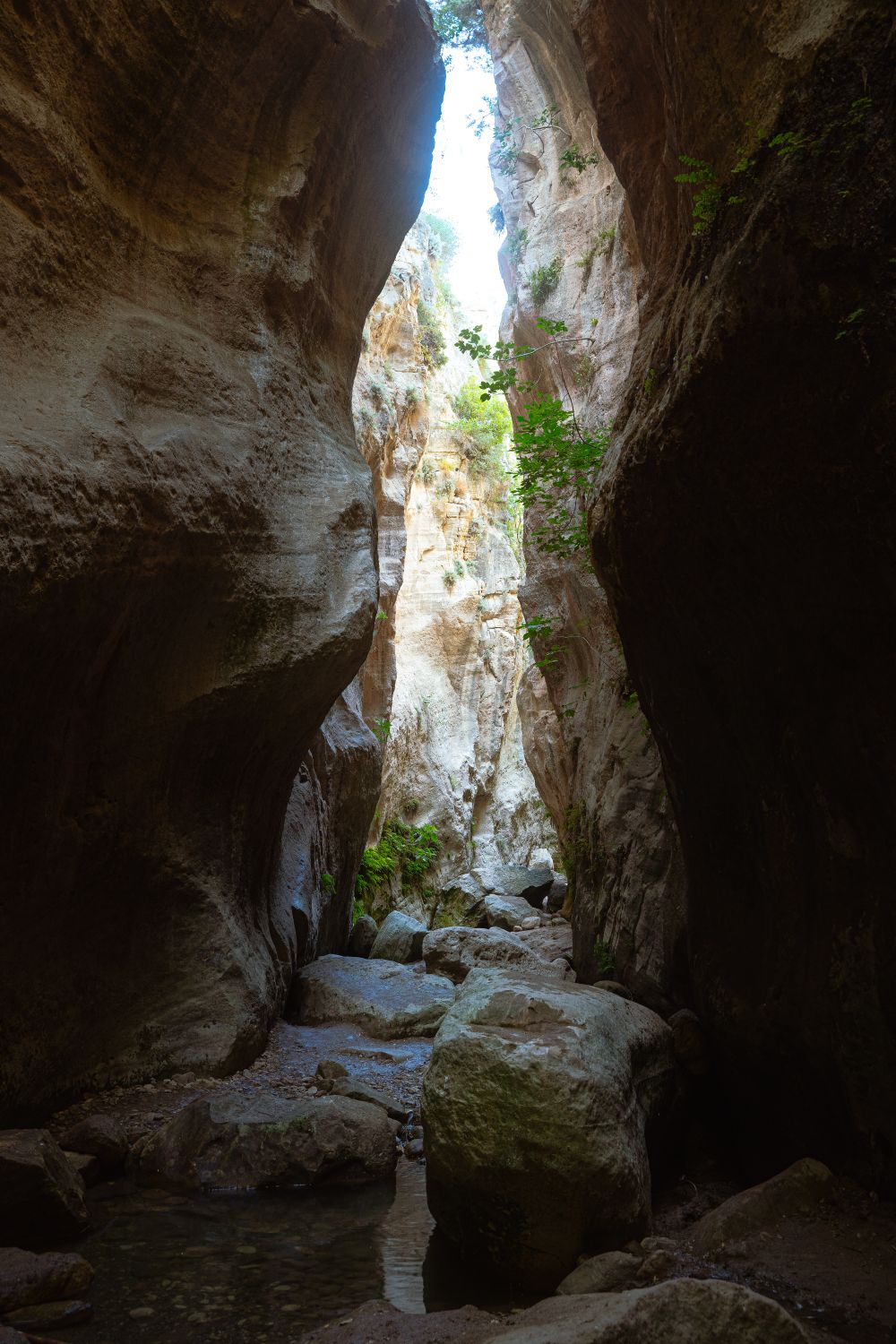 Photo credit on Pexels
Moab and the San Rafael Swell, Utah
While Zion gets the headlines, the desert surrounding Moab and the San Rafael Swell offers some of the most varied canyoneering terrain in the world. The sandstone formations here are ancient, colorful, and wildly sculpted by erosion.
Granary Canyon
A beautiful beginner-friendly canyon near Moab with gorgeous sandstone formations, short rappels, and ancient granary ruins that give the canyon its name. Rating: 3A II Best season: March through May, September through November
Leprechaun Canyon
Located near Hanksville, Leprechaun Canyon is famous for its tight, twisting narrows. Some sections are barely wide enough to squeeze through with a pack. The canyon features multiple rappels, stemming sections, and challenging downclimbs. Rating: 3A III Best season: March through May, September through November Guided trips: From $200-350 per person (full day)
Black Dragon Canyon
A non-technical slot canyon in the San Rafael Swell that delivers dramatic narrow passages and interesting geology without requiring ropes or technical gear. Rating: 1A II Best season: Year-round (but extremely hot in summer)
Antelope Canyon, Arizona
Antelope Canyon is the most famous slot canyon in the world, and for good reason. The flowing, wave-like walls of Navajo sandstone, sculpted by flash floods over millions of years, create one of the most photogenic natural formations on Earth. However, Antelope Canyon is not a canyoneering destination in the traditional sense. It is located on Navajo Nation land and can only be visited on guided tours. The experience is more of a photography walk than an adventure descent.
Upper Antelope Canyon: Easier access, famous light beams (best around noon, March-October) Lower Antelope Canyon: Narrower, requires ladders, often less crowded Cost: Guided tours from $40-100 per person. Photography tours (with tripods allowed) from $100-200. Best season: March through October for the best light beams Booking: Reserve well in advance, especially for peak summer dates.
Ouray, Colorado
Ouray, dubbed the “Switzerland of America,” sits in a dramatic amphitheater of 13,000-foot peaks in the San Juan Mountains. The canyoneering here is different from Utah’s desert slots: think rushing waterfalls, alpine pools, and lush vegetation clinging to granite walls. The Box Canyon is the most popular route, featuring a series of rappels alongside a thundering waterfall in a narrow granite gorge. It is dramatic, wet, and unforgettable.
Best canyons: Box Canyon, Portland Creek, Uncompahgre Gorge Rating: 3B II-III (most routes) Best season: July through September Guided trips: Half-day trips from $150-200 per person. Full-day trips from $250-350. Where to stay: Ouray has historic hotels from $80 per night and hostels from $35.
 Photo credit on Pexels
Reunion Island, France
Reunion Island in the Indian Ocean is one of the world’s premier canyoneering destinations, and relatively few international travelers know about it. The volcanic island features over 70 equipped canyons, ranging from gentle tropical descents to serious multi-pitch waterfall rappels. The star attraction is Trou de Fer (“Iron Hole”), a massive canyon with waterfalls plunging hundreds of meters into a lush, jungle-filled gorge. While the full descent of Trou de Fer is reserved for experts, there are plenty of accessible canyons nearby.
Best canyons: Trou de Fer (expert), Fleurs Jaunes (intermediate), Bras Rouge (beginner-friendly) Best season: May through November (dry season) Cost: Guided half-day trips from 50-80 euros. Full-day trips from 90-140 euros. Where to stay: Gites (mountain lodges) from 30-50 euros per night. Hotels from 60 euros.
Sierra de Guara, Spain
The Sierra de Guara in Aragon, northern Spain, is the birthplace of European canyoning. The limestone canyons here have been explored and equipped for decades, resulting in an extensive network of routes for every skill level. The Mascun Superior canyon is the classic introduction: a series of jumps, slides, swims, and short rappels through warm, turquoise water in a limestone gorge. It feels like a natural waterpark.
Best canyons: Mascun Superior (beginner), Mascun Inferior (intermediate), Gorgas Negras (advanced, full day) Best season: May through October Cost: Guided trips from 40-70 euros (half day) to 80-120 euros (full day) Where to stay: Alquezar (the gateway village) has hostels from 20 euros and hotels from 50 euros per night. The village itself is spectacularly beautiful, perched on a cliff above the Vero River.
Blue Mountains, Australia
The Blue Mountains west of Sydney contain numerous slot canyons carved into the sandstone plateau. These canyons are distinctly Australian: think dark, narrow passages with glow-worm colonies, cold plunge pools, and abseils (rappels) into ferny grottos. Best canyons: Empress Canyon (intermediate), Claustral Canyon (advanced, full day), Grand Canyon Walk (non-technical introduction) Best season: October through April (Australian spring and summer). Water can be very cold year-round. Cost: Guided trips from $150-250 AUD. Equipment rental from $50 AUD. Where to stay: Katoomba has hostels from $30 AUD and hotels from $80 AUD per night.
Essential Canyoneering Gear
Basic Gear (for all technical canyons)
- Helmet: Lightweight climbing helmet with drainage holes
- Harness: Canyoneering-specific harness (more comfortable when wet than climbing harnesses)
- Rappel device: Figure-8 or tube-style device (ATC or similar)
- Ropes: Static or semi-static canyon ropes (resist water absorption)
- Wetsuit: 3mm to 5mm depending on water temperature
- Canyon shoes: Sticky rubber soles with drainage (5.10 Canyoneer or similar)
- Dry bag: For camera, phone, and dry clothes
- Webbing and rappel rings: For building anchors
Safety Essentials
- First aid kit (waterproof)
- Headlamp (waterproof, with fresh batteries)
- Emergency whistle
- Emergency bivy or space blanket
- Multi-tool or knife (for cutting stuck rope)
Flash Flood Awareness
Flash floods are the number one killer in canyons. The rules are absolute:
- Always check the weather forecast for the entire watershed, not just the canyon entrance
- Never enter a slot canyon if rain is forecast within the drainage area
- Know the escape routes before you enter
- Watch for rising water, debris, or the sound of rushing water upstream
- If in doubt, do not enter. The canyon will be there tomorrow.
 Photo credit on Pexels
Planning Your Canyoneering Trip
For Beginners
Start with a guided trip. A good guide teaches you the technical skills (rappelling, anchor building, rope management) while keeping you safe in an unfamiliar environment. Most destinations have reliable outfitters, and a half-day guided trip typically costs $100-250 per person.
For Experienced Canyoneers
Research thoroughly using resources like canyoneeringusa.com, ropewiki.com, and local guidebooks. Always leave a detailed trip plan with someone who knows how to contact rescue services. Carry enough gear to handle unexpected situations (stuck ropes, rising water, injuries).
Budget Overview
| Destination | Guided Day Trip | Accommodation | Best Value |
|---|---|---|---|
| Zion, Utah | $200-400 | $80-200/night | Spring/Fall |
| Moab, Utah | $200-350 | $60-150/night | October |
| Ouray, Colorado | $150-350 | $80-150/night | August |
| Sierra de Guara, Spain | $50-120 | $20-70/night | June |
| Reunion Island | $50-140 | $30-80/night | July |
| Blue Mountains, Australia | $150-250 | $30-100/night | November |
Building Your Canyoneering Skills: A Progression
Step 1: Take an Introductory Course
Before entering any technical canyon, take a canyoneering course that covers:
- Rappelling technique (body positioning, speed control, self-rescue)
- Anchor assessment (evaluating fixed anchors for safety)
- Rope management (coiling, throwing, pulling, and dealing with stuck ropes)
- Water safety (swimming in current, managing cold water, pothole escape)
- Route-finding (reading the canyon, identifying hazards, choosing lines)
Many outfitters in Utah, Colorado, and Spain offer 1-2 day introductory courses for $200-500 per person. This is the best investment you can make in the sport.
Step 2: Practice on Known Routes
After your course, start with well-documented, well-traveled canyons. These have reliable beta (route descriptions), established anchors, and enough traffic that help is available if something goes wrong. Ropewiki.com and canyoneeringusa.com provide detailed route descriptions with GPS coordinates, anchor conditions, and difficulty ratings.
Step 3: Build Your Confidence Gradually
Progress through the difficulty ratings systematically:
- Start with 3A (technical, dry) canyons to master rappelling
- Move to 3B (technical, water) to add swimming and cold management
- Attempt longer routes (III-IV time commitment) to build endurance
- Tackle higher technical ratings (4A, 4B) only with a mentor or very experienced partner
Step 4: Become a Competent Leader
Once you can confidently lead 3B III routes, you have the skills to plan and execute your own canyon adventures. This typically takes 20-30 canyon days over 1-2 years for most people.
Common Mistakes to Avoid
- Underestimating water conditions: Water levels can transform a moderate canyon into a deadly trap. Always check recent beta for current conditions.
- Insufficient rope length: Carry rope that is at least 10 meters longer than the tallest rappel. Running out of rope mid-rappel is a serious emergency.
- Ignoring weather forecasts: A thunderstorm 50 miles away can send a wall of water through your canyon. Check forecasts for the entire watershed.
- Going too fast for your skill level: Canyon terrain is unforgiving. A twisted ankle 5 miles into a slot canyon with no cell service is a serious situation.
- Poor anchor assessment: Not all fixed anchors are reliable. Learn to assess webbing condition, bolt integrity, and natural anchor strength.
Photography in Slot Canyons
Slot canyons are among the most photogenic natural features on Earth, but they present unique photographic challenges:
Tips for Great Canyon Photos
- Shoot in RAW format for maximum editing flexibility (the contrast between bright sky and dark canyon walls is extreme)
- Use a wide-angle lens (14-24mm) to capture the scale of narrow passages
- Midday light is best for slot canyons, when sunlight penetrates deepest into the narrow passages
- Bring a waterproof camera or housing for wet canyons (your phone in a waterproof case works in a pinch)
- Patience pays: Wait for the light to shift. The interplay of direct sunlight and reflected light changes constantly in slot canyons.
- Protect your gear: Sand and water destroy camera equipment. Use a dry bag between shots.
Why Canyoneering is Worth Your Time
Canyoneering takes you to places that no other outdoor activity can reach. The slot canyons of Utah, the waterfall descents of Reunion Island, and the limestone gorges of Spain are all hidden worlds that exist below the surface of the landscape, invisible to anyone standing on the rim. The sport demands a well-rounded skill set (climbing, swimming, problem-solving, route-finding). Before heading out, review our adventure travel safety guide for essential preparation tips and rewards you with experiences that are genuinely unique. No two canyons are alike, and even the same canyon changes dramatically with different water levels and seasons.
If you are drawn to exploration and discovery, canyoneering will become your obsession. Start with a guided trip in one of the destinations above, learn the fundamental skills, and then start exploring on your own. If you also love being on foot in dramatic landscapes, check out our bucket-list hiking trails. The canyons are waiting.
Related Reading
Get the best ThrillStays tips in your inbox
Weekly guides, deals, and insider tips. No spam, unsubscribe anytime.