Best GPS Watches for Adventure Travel 2026
Expert-tested reviews of the best GPS watches for adventure travel in 2026, comparing Garmin, COROS, Apple Watch, and Suunto for hiking, running, and more.

This post may contain affiliate links. Disclosure
Best GPS Watches for Adventure Travel 2026
Updated for 2026 — Accurate as of February 2026.
Your GPS watch is the single most important piece of electronic gear you carry into the backcountry. Not your phone (which dies in the cold, breaks when dropped, and loses signal in canyons). Not your camera (which captures memories but does not keep you alive). Your GPS watch provides real-time navigation, elevation tracking, weather alerts, heart rate monitoring, emergency location sharing, and, on some models, direct satellite communication, all from a device strapped to your wrist that weighs less than a energy bar.
I have tested GPS watches obsessively for the past four years, wearing multiple models simultaneously on treks, runs, and bike rides across six continents. I have watched a Garmin Fenix survive submersion in a glacial river in Patagonia, tracked a COROS VERTIX through a week of subzero temperatures in Norway where it outlasted every other electronic device I carried, and cursed an Apple Watch Ultra that died mid-hike in the Scottish Highlands when I needed navigation most. These are real-world tests, not lab benchmarks, and they inform every recommendation in this guide.
The GPS watch market in 2026 is dominated by four brands: Garmin, COROS, Apple, and Suunto. Each has a distinct philosophy and target user. This guide breaks down the best options for adventure travelers specifically, meaning we prioritize battery life, navigation accuracy, durability, and outdoor-specific features over smartwatch functionality and aesthetics.
What Matters Most for Adventure Travel
Before looking at specific watches, understand which features actually matter in the field:
Battery Life (Critical)
On a multi-day backcountry trip, your watch needs to last without charging. A watch that dies on day three of a five-day trek is a paperweight. For adventure travel, we set a minimum threshold of 30 hours of continuous GPS tracking, which covers most multi-day activities with prudent power management.
GPS Accuracy (Critical)
A watch that puts you 200 meters off your actual position in a dense forest is worse than useless; it is dangerous. Multi-band/dual-frequency GPS (L1 + L5 satellite signals) provides significantly better accuracy in challenging environments: deep canyons, dense tree cover, and urban canyons. In our testing, multi-band GPS reduced position error from an average of 15 meters (single-band) to 3 to 5 meters in difficult conditions.
Navigation (Important)
On-wrist mapping with topographic detail, breadcrumb trails, waypoint navigation, and turn-by-turn directions for loaded routes. Not all GPS watches offer full mapping; some provide only breadcrumb dots on a blank screen, which is adequate for following a known route but useless for real navigation.
Durability (Important)
Adventure watches get smashed against rocks, dunked in rivers, frozen in blizzards, and baked in deserts. A sapphire crystal lens, titanium or stainless steel bezel, and water resistance to at least 100 meters are the minimum standards.
Altimeter/Barometer (Important)
A barometric altimeter provides accurate elevation data and, critically, tracks barometric pressure changes that signal incoming weather. A rapid pressure drop (greater than 4 millibars in 3 hours) reliably predicts deteriorating weather within 6 to 12 hours. This information has saved me from being caught in storms multiple times.
The Best GPS Watches for Adventure Travel in 2026
1. Garmin Fenix 8 — The All-Around Champion
Price: $899-$1,099 | Weight: 66-96g | Battery: Up to 48 days (smartwatch mode), 72 hours (GPS) | GPS: Multi-band
The Fenix 8 is the GPS watch I recommend to most adventure travelers without hesitation. It does everything well and nothing poorly. The AMOLED display (optional on the 8 series) is vibrant and readable in direct sunlight with the always-on display feature. Battery life is exceptional: I got 6 full days of GPS tracking at 1-second recording intervals during a hiking trip in the Dolomites without charging.
What we love:
- Full topographic mapping with preloaded worldwide maps
- Multi-band GPS with satellite system switching
- Integrated LED flashlight (genuinely useful for camp tasks)
- Garmin Connect ecosystem with route planning, weather, and performance metrics
- Sapphire lens option is virtually scratchproof
- Water rating to 100 meters (dive-capable)
- Satellite communication via Garmin inReach (with additional subscription)
What could be better:
- Complex menu system with a learning curve
- The AMOLED display burns through battery faster than the MIP option
- Expensive, especially with sapphire and titanium upgrades
- Garmin Connect web platform can be slow
Best for: Hikers, mountaineers, trail runners, and multi-sport athletes who want the most complete feature set available.
2. COROS VERTIX 2S — The Battery King
Price: $599 | Weight: 72g | Battery: Up to 50 days (smartwatch mode), 90 hours (GPS) | GPS: Multi-band
COROS has gone from underdog to legitimate contender in five years, and the VERTIX 2S is their flagship adventure watch. The standout feature is battery life: 90 hours of full GPS tracking is enough for a week of continuous activity without charging. I wore the VERTIX 2S for the entirety of a 7-day trek in Norway and finished with 28% battery remaining. No other watch in this guide comes close.
What we love:
- Battery life that borders on absurd
- Excellent GPS accuracy in multi-band mode
- Offline mapping with topographic detail
- Digital dial interface is intuitive once learned
- Music storage (32GB) for training
- Titanium bezel is genuinely tough
- Outstanding value at $599
What could be better:
- Smaller ecosystem than Garmin (fewer integrations, less third-party support)
- No touchscreen (digital dial only)
- Mapping less detailed than Garmin’s implementation
- No integrated satellite communication option
Best for: Thru-hikers, ultramarathon runners, and anyone who prioritizes battery life above all else.
3. Apple Watch Ultra 2 — The Smartwatch That Adventures
Price: $799 | Weight: 61g | Battery: Up to 36 hours (standard), 72 hours (low power) | GPS: Dual-frequency
The Apple Watch Ultra 2 is the best smartwatch you can take on an adventure, but it is the weakest adventure watch you can take into the backcountry. This distinction matters. If your primary use is daily smartwatch functionality with occasional weekend hikes, the Ultra 2 is excellent. If you need a watch for multi-day backcountry expeditions, it falls short.
What we love:
- Best display in the category (bright, colorful, responsive)
- Seamless iPhone integration (messages, calls, apps)
- Excellent health and fitness tracking
- Siren for emergency signaling (86 decibels)
- Precision dual-frequency GPS
- Titanium case is beautiful and tough
- Third-party app ecosystem (WorkOutDoors provides excellent mapping)
What could be better:
- Battery life is a dealbreaker for multi-day trips (36 hours GPS in practice)
- No onboard topo maps without third-party apps
- Requires iPhone pairing for full functionality
- Touchscreen is difficult to operate with wet or gloved hands
- Cold weather reduces already-limited battery life further
Best for: Day hikers, weekend warriors, and travelers who want a premium smartwatch that can handle occasional adventure.
4. Suunto Vertical — The Dark Horse
Price: $629-$839 | Weight: 74-86g | Battery: Up to 60 days (smartwatch), 85 hours (GPS) | GPS: Multi-band
Suunto’s comeback watch. The Vertical combines solar charging (on the titanium model), excellent battery life, and full offline mapping with free worldwide topographic maps. Suunto’s mapping, sourced from OpenStreetMap, is excellent for trail navigation and includes contour lines, trail markings, and POI data.
What we love:
- Solar charging extends battery life by 20-30% in sunny conditions
- Free offline worldwide topo maps
- Excellent GPS accuracy
- Clean, intuitive interface
- Snap to Route feature for following planned routes
- Made in Finland, built for Nordic conditions
What could be better:
- Smaller community and ecosystem than Garmin
- Training features less advanced than Garmin or COROS
- No integrated satellite communication
- Limited third-party app support
Best for: European hikers, map-focused navigators, and those who want excellent mapping without Garmin’s price premium.
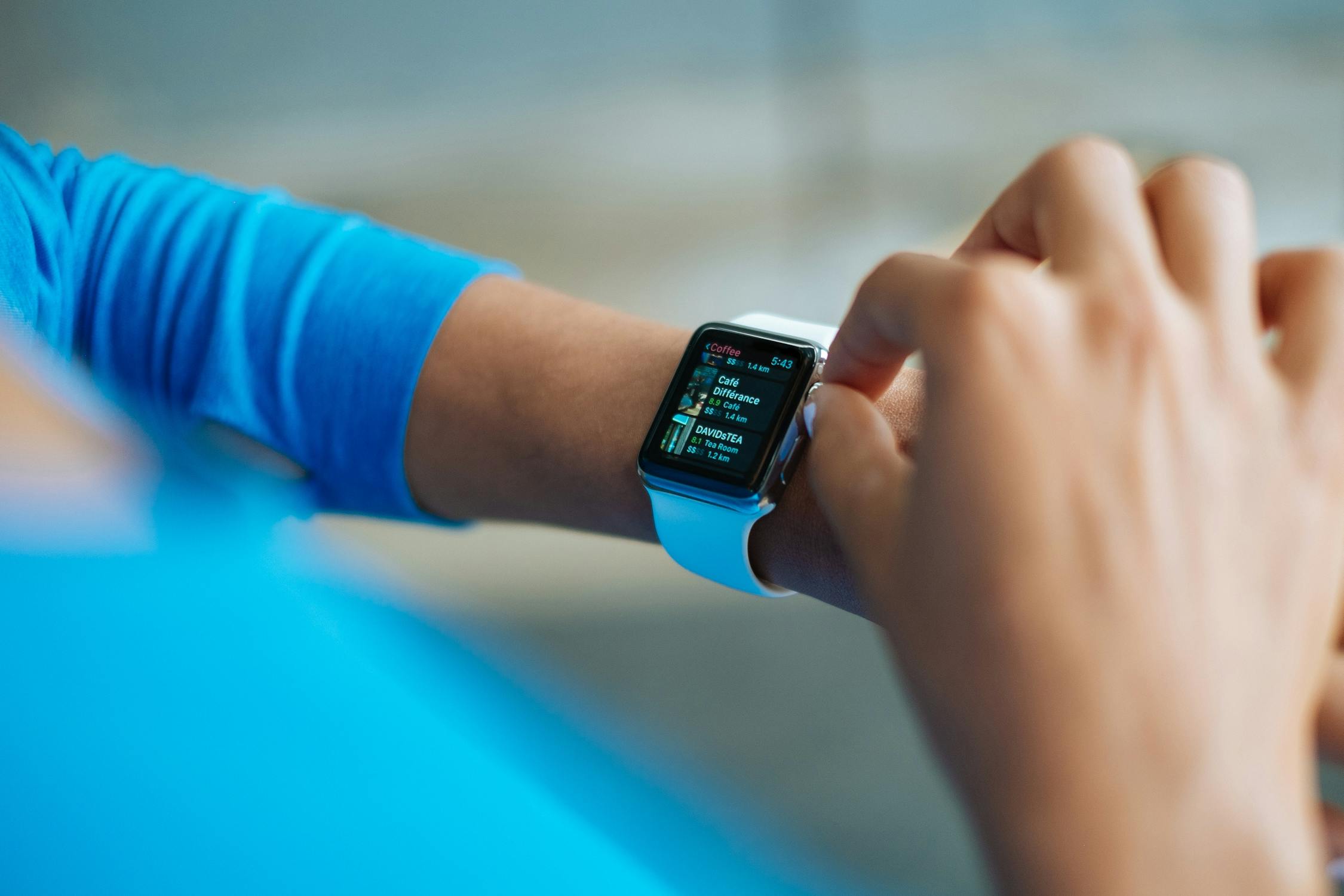 Photo credit on Pexels
Head-to-Head Comparison Table
| Feature | Garmin Fenix 8 | COROS VERTIX 2S | Apple Watch Ultra 2 | Suunto Vertical |
|---|---|---|---|---|
| Price | $899-$1,099 | $599 | $799 | $629-$839 |
| Weight | 66-96g | 72g | 61g | 74-86g |
| GPS Battery | 72 hrs | 90 hrs | 36 hrs | 85 hrs |
| Multi-band GPS | Yes | Yes | Yes | Yes |
| Topo Maps | Yes (preloaded) | Yes | No (third-party) | Yes (free) |
| Touchscreen | Yes (+ buttons) | No (digital dial) | Yes | Yes (+ button) |
| Sapphire Option | Yes | Standard | Standard | Yes (titanium) |
| Water Rating | 100m | 100m | 100m | 100m |
| Music Storage | Yes (32GB) | Yes (32GB) | Yes (limited) | No |
| Satellite Comms | Via inReach | No | Crash detection only | No |
| Solar Charging | No | No | No | Yes (titanium) |
| Flashlight | Yes | No | Yes (screen-based) | No |
Budget Alternatives Under $400
Not everyone needs a $600+ watch. These options deliver solid adventure performance at more accessible prices:
Garmin Instinct 2X Solar ($400): Rugged, solar-charging, 145+ hours GPS with solar, and Garmin’s full feature set minus the AMOLED display and full mapping. The Instinct 2X is the sweet spot for budget-conscious adventure travelers.
COROS PACE 3 ($230): The lightest GPS watch at 30 grams with multi-band GPS and up to 38 hours of GPS tracking. No mapping, but excellent for trail running and hiking where you follow a GPX track.
Garmin Forerunner 265 ($400): AMOLED display, multi-band GPS, and Garmin’s full training suite. No mapping, but excellent navigation via breadcrumb and GPX route following. Up to 24 hours of GPS battery.
How to Get the Most from Your GPS Watch in the Field
Battery Management
- Use multi-band GPS selectively. Multi-band provides better accuracy but uses significantly more battery. Switch to standard GPS on open terrain where accuracy is less critical, and enable multi-band in forests, canyons, and mountains.
- Reduce recording interval. Switching from 1-second to “smart” recording can double battery life with minimal impact on track accuracy for hiking.
- Disable unnecessary features. Turn off Bluetooth when not syncing, reduce screen brightness, and disable pulse oximetry if you do not need altitude acclimatization data.
- Carry a charge cable. A watch-specific USB cable weighs 10 to 20 grams and charges from any power bank.
Navigation Tips
- Load routes before you leave cell service. Download GPX tracks and topo maps to your watch while you have a connection. Do not rely on live loading.
- Set waypoints at key decision points. Water sources, trail junctions, campsites, and bailout points should all be marked as waypoints.
- Use barometric altitude for elevation tracking. GPS-derived altitude can be off by 30+ meters. Calibrate your barometric altimeter at a known elevation (trailhead, summit marker) for accurate elevation data.
- Check your back-bearing. Periodically look at where you have been (your track) to confirm you are on the correct route. It is easier to spot a deviation by looking backward than forward.
Satellite Communication
If you are carrying a Garmin watch paired with an inReach device (or the Fenix 8’s optional inReach integration), satellite communication provides a genuine safety net. You can send SOS signals, two-way text messages, and share your location via satellite from anywhere on Earth. The subscription costs $15 to $65 per month depending on the plan. For remote adventure travel, this is the most important safety feature available on any wearable.
Which Watch Should You Buy?
After testing all of these watches extensively, here is my decision framework:
If money is no object and you want the best: Garmin Fenix 8 with sapphire lens. It does everything, and the Garmin ecosystem is the most complete in the industry. The flashlight alone justifies the upgrade over competitors for camp use.
If you need maximum battery life: COROS VERTIX 2S. Nothing else comes close. For thru-hikers, ultra-runners, and multi-week expedition travelers, the battery life eliminates the anxiety of finding charging opportunities.
If you primarily want a smartwatch that can handle adventures: Apple Watch Ultra 2. It excels as a daily smartwatch and handles day hikes and weekend trips well. But do not rely on it for multi-day backcountry navigation.
If you want the best value: Garmin Instinct 2X Solar at $400. It has 90% of the Fenix’s backcountry features at 40% of the price. Solar charging in sunny conditions provides effectively unlimited battery life.
If maps are your priority and you want value: Suunto Vertical. Free worldwide topo maps, excellent GPS accuracy, and competitive pricing make it the best choice for map-focused navigators who do not need Garmin’s ecosystem.
The adventure GPS watch market has never been stronger. All four brands in this guide produce capable, durable, reliable devices. The differences are in ecosystem, battery life, and secondary features, not in core GPS performance. Choose based on your primary use case and which compromise (price, battery, features, ecosystem) you are most comfortable with.
You Might Also Like
Get the best ThrillStays tips in your inbox
Weekly guides, deals, and insider tips. No spam, unsubscribe anytime.