Albania: The Balkans' Adventure Hidden Gem
Albania adventure travel guide for 2026. Hiking the Accursed Mountains, diving the Riviera, canyoning, and paragliding at the lowest prices in Europe.

This post may contain affiliate links. Disclosure
Albania: The Balkans’ Adventure Hidden Gem
Updated for 2026 — Accurate as of February 2026.
Albania is the adventure travel destination that should be on every adventurer’s radar in 2026. This small Balkan country has everything that makes an adventure destination great: dramatic mountains, a stunning Mediterranean coastline, deep canyons, ancient ruins, and a culture that is among the most hospitable in Europe. And it has one thing that almost no other European destination can match: it is absurdly affordable.
A full meal in a restaurant costs 3-6 euros. A private room in a guesthouse costs 15-25 euros. A beer costs 1 euro. A guided canyon tour costs 30 euros. These are not budget-stretch prices; these are “did I read that correctly” prices. Albania is the cheapest country in Europe for travelers, and the adventure experiences available here are genuinely world-class.
Albania was isolated under a hardline communist regime until 1991 and has only opened to tourism in the past two decades. The infrastructure is developing rapidly but has not yet reached the level where it attracts mass tourism. The result is a destination where you can hike for days without seeing another tourist, swim on Mediterranean beaches that would be packed in Greece or Croatia, and explore medieval towns that feel untouched by the modern world.
I spent three weeks in Albania in the summer of 2025 and it became one of my favorite adventure travel experiences anywhere in the world. Here is everything you need to know.
The Accursed Mountains (Prokletije): Albania’s Trekking Crown Jewel
The Albanian Alps, known locally as the Accursed Mountains (Bjeshket e Namuna), are the most dramatic mountain range in the Balkans. Jagged limestone peaks rise above 2,500 meters, glacial valleys cut between the ridges, and traditional mountain villages are scattered through the valleys, connected by ancient shepherds’ paths that serve as today’s trekking routes.
Peaks of the Balkans Trail
The Peaks of the Balkans is a 192 km circular trekking route that crosses Albania, Montenegro, and Kosovo, linking the mountain communities of three countries through some of the most spectacular alpine scenery in southern Europe. The Albanian sections, through the Valbona Valley and over the Prokletije ridges, are widely considered the most beautiful.
Distance: 192 km (full circuit), Albanian sections approximately 80 km Duration: 10-13 days (full circuit) or 4-6 days (Albanian section only) Difficulty: Moderate to challenging (mountain terrain, some steep passes, river crossings) Cost: Free to hike. Guesthouse accommodation in mountain villages from 20-30 EUR per night including dinner and breakfast. Guides from 40 EUR per day. Best season: June through September Permits: Border crossing permits between Albania, Montenegro, and Kosovo are included in the trail’s registration system (free, register online at peaksofthebalkans.com).
Theth to Valbona Day Hike
If you have limited time, the Theth to Valbona crossing is the single best day hike in Albania and one of the best in Europe. The trail crosses the Valbona Pass (1,795m) between two spectacular valleys, passing through alpine meadows, beech forests, and past mountain streams. On a clear day, the views from the pass are breathtaking.
Distance: 14-17 km (depending on exact route and trailhead) Duration: 6-8 hours Difficulty: Moderate (one significant climb of approximately 800m) Cost: Free. Furgon (minibus) transfer from Shkodra to Theth from 10 EUR. Ferry across Koman Lake from Valbona to Fierza (5 EUR), then furgon to Shkodra. Where to stay: Theth has guesthouses from 15-25 EUR including dinner and breakfast. Valbona has guesthouses from 15-25 EUR.
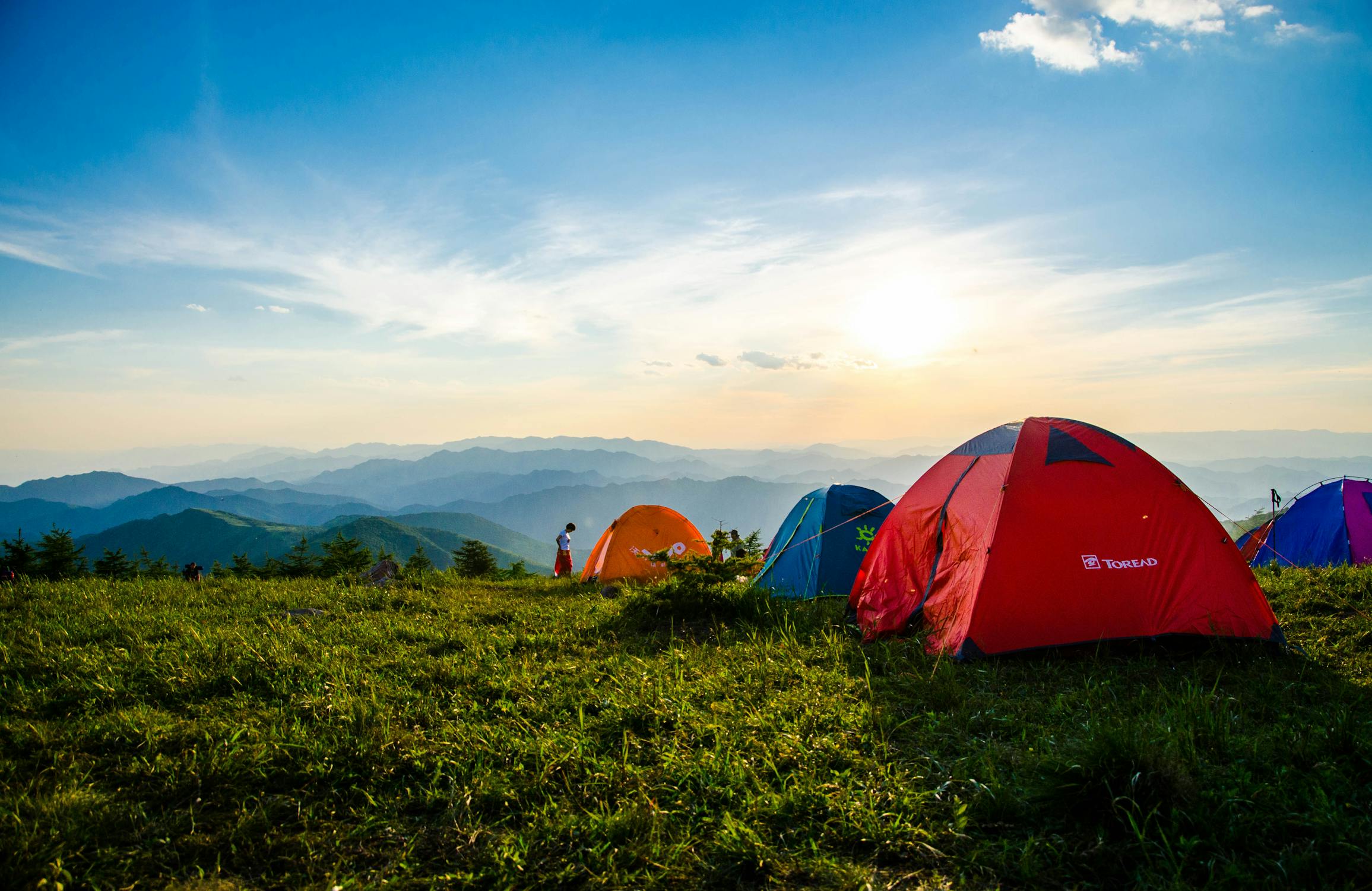 Photo credit on Pexels
The Albanian Riviera
Albania’s Ionian coastline, the Albanian Riviera, runs from Vlora to Saranda and features some of the most beautiful beaches in the Mediterranean. The water is turquoise, the beaches are backed by dramatic mountains, and the development level is far below that of the Greek islands visible across the strait.
Best Beaches
- Gjipe Beach: Accessed by a 30-minute hike or by boat, Gjipe is a secluded cove at the mouth of a canyon with turquoise water and dramatic cliff walls. Free.
- Dhermi: A long pebble beach with excellent swimming and emerging but still affordable tourism infrastructure. Accommodation from 15 EUR.
- Ksamil: Small islands and calm, crystal-clear water near the ancient ruins of Butrint. The closest thing Albania has to a beach resort, but still affordable. Accommodation from 20 EUR.
- Himara: A small coastal town with several beaches and a growing adventure sports scene (kayaking, diving, paragliding). Accommodation from 15 EUR.
Water Sports on the Riviera
Sea kayaking: Guided kayaking along the Riviera coastline, exploring sea caves and hidden beaches. Half-day tours from 25-35 EUR.
Diving: The Riviera’s clear water (20-30m visibility) and underwater terrain (caves, drop-offs, wrecks from the communist era) make for excellent diving. Two-tank dives from 50-70 EUR. PADI Open Water courses from 250-300 EUR. These are among the lowest diving prices in Europe.
Paragliding: Tandem paragliding flights over the Riviera coastline from the mountains above Himara and Dhermi. Flights from 50-70 EUR (compare to 150-200 EUR in the Alps or 100-150 EUR in Turkey).
Canyoning in Osumi Canyon
The Osumi Canyon is Albania’s answer to the American Southwest. A deep limestone gorge carved by the Osumi River, with walls rising 80 meters on either side, natural pools, and sculpted rock formations. Guided canyoning trips involve swimming, wading, scrambling, and jumping through the canyon, a spectacular half-day adventure.
Cost: Guided canyoning trips from 30-50 EUR per person, including transport from Berat and all equipment Best season: May through October (water levels must be safe; the canyon is inaccessible after heavy rain) Duration: 4-6 hours in the canyon Where to base: Berat, a stunning UNESCO-listed town of Ottoman architecture 1 hour from the canyon
Koman Lake Ferry
The ferry ride across Koman Lake is not technically an adventure activity, but it is one of the most spectacular travel experiences in Europe. The ferry navigates a narrow, fjord-like reservoir through the Albanian Alps, with near-vertical rock walls rising hundreds of meters on either side and waterfalls cascading into the lake. The 2.5-hour journey has been compared to the Norwegian fjords, and it is free with the purchase of the ferry ticket (5-7 EUR).
Route: Koman to Fierza (or reverse) Duration: 2.5 hours Cost: 5-7 EUR per person Best season: April through October (the ferry runs a reduced schedule in winter) Connection: The ferry connects naturally with the Theth-Valbona trekking route, making it part of the most popular adventure circuit in Albania.
Berat and the Via Ferrata
Berat, the “City of a Thousand Windows,” is a UNESCO World Heritage site with an Ottoman old town cascading down a hillside beneath a massive hilltop fortress. The fortress (Kalaja) is free to enter and provides panoramic views over the town and the Osumi Valley.
In recent years, a via ferrata has been installed on the cliffs near Berat, offering a climbing experience up the canyon walls using fixed cables, ladders, and iron steps. The via ferrata is one of the few in the Balkans and costs significantly less than comparable experiences in the Alps.
Via ferrata cost: 30-50 EUR per person including guide and equipment Duration: 2-3 hours Difficulty: Moderate (no climbing experience required) Where to stay: Berat has hostels from 8 EUR and guesthouses from 15 EUR
Comparison: Albania vs. Other European Adventure Destinations
| Category | Albania | Croatia | Greece | Slovenia |
|---|---|---|---|---|
| Meal cost | 3-6 EUR | 10-18 EUR | 8-15 EUR | 8-14 EUR |
| Hostel dorm | 6-10 EUR | 15-25 EUR | 12-20 EUR | 15-25 EUR |
| Private room | 15-25 EUR | 40-70 EUR | 30-60 EUR | 35-55 EUR |
| Guided canyon tour | 30-50 EUR | 60-90 EUR | 50-80 EUR | 40-70 EUR |
| Diving (2 dives) | 50-70 EUR | 80-120 EUR | 70-100 EUR | N/A |
| Paragliding | 50-70 EUR | 90-130 EUR | 80-120 EUR | 100-140 EUR |
| Overall affordability | Excellent | Moderate | Moderate | Moderate |
Albania is consistently 40-60 percent cheaper than its neighbors for comparable adventure activities. The quality of the experiences is, in many cases, equal or superior.
Practical Information
Visa: EU, US, Canadian, Australian, and UK citizens can enter Albania visa-free for up to 90 days. No registration required. Check the Albanian Ministry of Foreign Affairs for the latest entry requirements.
Currency: Albanian lek (ALL). 1 EUR = approximately 100 ALL. Euros are widely accepted but you get a better rate paying in lek. ATMs are available in all towns.
Language: Albanian. English is spoken by younger people in tourist areas but is rare in rural areas. Italian is widely understood due to proximity and historical connections. Learning basic Albanian phrases (faleminderit = thank you, sa kushton = how much does it cost) is greatly appreciated.
Transport: Public furgons (minibuses) connect most towns and are very cheap (2-8 EUR for most routes). Schedules are informal (they depart when full). Rental cars from 20-30 EUR per day. Driving is adventurous; road quality varies from excellent (new highways) to terrible (mountain roads).
Safety: Albania is very safe for travelers. The hospitality culture (besa, a code of honor around hosting guests) means locals go out of their way to help visitors. Petty crime rates are lower than in most Western European countries. Driving is the biggest risk.
Best time to visit: June through September for coast and mountains. May and October for lower crowds and pleasant temperatures. The mountains are snow-covered November through April.
Suggested itinerary (2 weeks): Days 1-2: Tirana (explore the capital, day trip to Dajti Mountain) Days 3-5: Shkodra, Theth Valley, Theth-Valbona hike, Koman Lake ferry Days 6-7: Berat (old town, canyon tour) Days 8-10: Albanian Riviera (Dhermi, Himara, Gjipe Beach, water sports) Days 11-12: Saranda and Ksamil (beaches, Butrint ruins) Days 13-14: Gjirokaster (UNESCO old town) and return to Tirana
Mountain Biking and Cycling Adventures
Albania’s improving road network and vast network of dirt tracks and shepherds’ paths make it an emerging mountain biking destination. The terrain is challenging (Albania is mountainous), the traffic on rural roads is minimal, and the scenery is spectacular.
The route from Shkodra to the Albanian Riviera via the mountain interior (through Theth, over the Qafa e Thores pass, and south through Permet to the coast) is a multi-day cycling adventure that passes through some of the most dramatic scenery in the Balkans. Expect unpaved roads, steep climbs, basic accommodation in village guesthouses, and the kind of raw, unpackaged adventure cycling that is increasingly rare in Europe.
Mountain bike rental: Available in Tirana and Shkodra from 15-25 EUR per day Road bike rental: Limited. Bring your own or rent in Tirana. Best cycling season: May through October
Why Albania Is Europe’s Best-Kept Adventure Secret
Albania occupies a unique position in European adventure travel. It has the dramatic scenery of Norway or Switzerland at the prices of Southeast Asia. It has the Mediterranean coastline of Croatia without the cruise ship crowds. It has the mountain trekking of the Austrian Alps without the infrastructure fees and booking requirements. And it has a hospitality culture that makes visitors feel genuinely welcomed rather than merely tolerated.
The country is developing rapidly, and prices will rise as tourism grows. In 2026, Albania remains one of the best-value adventure destinations on Earth. In five years, it may no longer be the budget miracle it is today. If Albania interests you, go now.
Butrint: Ancient Ruins and Natural Beauty
Butrint, a UNESCO World Heritage archaeological site near Saranda in southern Albania, is one of the most important archaeological sites in the Mediterranean. The ruins span 2,500 years, from a Greek colony to a Roman city to a medieval fortress, all set within a lush national park on a peninsula surrounded by a lagoon. The combination of ancient ruins, Mediterranean forest, and waterfront setting makes Butrint one of the most atmospheric archaeological sites in Europe.
The national park surrounding the ruins offers gentle hiking through forests and wetlands, with birdwatching opportunities (cormorants, herons, and occasionally flamingos in the lagoon). Entry to the site costs 1,000 ALL (approximately 9 EUR), which is a fraction of what comparable sites charge in Greece or Italy.
Getting there: 20 minutes by bus from Saranda (100 ALL / 1 EUR). Or take a boat from Corfu, Greece (30 minutes by ferry to Saranda, then bus to Butrint).
Hiking in the Valbona Valley
Beyond the famous Theth-Valbona crossing, the Valbona Valley National Park offers several day hikes that showcase the dramatic scenery of the Albanian Alps without requiring a multi-day commitment. The valley floor hike from Valbona village to the Rragam spring (8 km return, 3 hours) follows the Valbona River through beech forest beneath towering limestone peaks. More ambitious hikers can climb to the alpine lakes above the valley (6-8 hours round trip, 1,200m elevation gain) for views that rival anything in the Dolomites.
The guesthouses in Valbona are among the most welcoming in Albania. Dinner is typically a home-cooked feast of fresh vegetables from the garden, mountain cheeses, lamb or chicken, and homemade raki (fruit brandy). The owner sits with you, shares stories about life in the mountains, and refuses to let you leave until you have eaten more than you thought physically possible.
You Might Also Like
Get the best ThrillStays tips in your inbox
Weekly guides, deals, and insider tips. No spam, unsubscribe anytime.